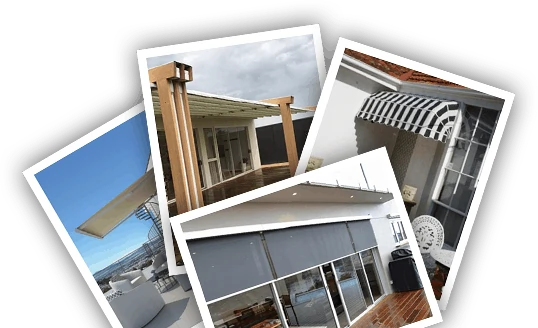
Outdoor blinds in Melbourne are commonly available in clear or tinted PVC and sunscreen mesh, with manual, guided-track and motorised configurations. Choose based on sun exposure, wind, privacy, structural fixing points, and the total installed price.
Choosing outdoor blinds in Melbourne can be frustrating when a product looks excellent in a showroom but struggles with afternoon glare, cold gusts or neighbours looking into your entertaining area. Homeowners often compare colours and prices before deciding what their patio actually needs.
The right blind can help make an alfresco, pergola or deck more comfortable without unnecessarily closing it in. This guide explains the main types, realistic budget ranges and seven essential checks to make before accepting a quote.
Which Outdoor Blinds Are Best for Melbourne Homes?
The best outdoor blind depends on the problem you want to solve. A west-facing courtyard with intense late-afternoon sun needs a different material from a sheltered, south-facing patio where keeping out draughts matters most.
So, it’s wiser to start with the outcome and then choose a suitable material and operating system:
- Want clearer garden views and some wind screening? Compare clear or tinted PVC café blinds.
- Want less glare and better airflow on hot days? Start with sunscreen mesh.
- Want edges that stay more controlled during normal use? Ask about a compatible guided-track system.
- Want to operate several large blinds frequently? Compare manual and motorised operation.
- Need shade from above, rather than across a vertical opening? Consider an awning or retractable roof instead.
However, these categories are not mutually exclusive. For example, a sunscreen mesh blind can also be track-guided and motorised, so compare the complete specification rather than assuming each name refers to a different material.
Types of Outdoor Blinds Available in Melbourne
Clear and tinted PVC café blinds
Clear PVC café blinds help reduce breezes while preserving garden views. They are commonly installed around covered patios and verandahs, where the existing roof already provides overhead shelter.
However, a transparent panel does not automatically provide privacy or effective solar control. Clear PVC may also trap warmth when an area is closed off, while tinted options change light levels and visibility without necessarily solving overheating.
For more clarification about this style, you may compare café blinds and bistro blinds before deciding how enclosed you want your outdoor area to feel.
Sunscreen mesh outdoor blinds
Sunscreen mesh is a practical option for patios where filtering glare and allowing air to circulate are priorities. The fabric is available in different weave openness, colours and specifications, which affect how much light and visibility pass through.
For instance, a mesh blind can soften harsh sunlight on a north- or west-facing area without creating the fully transparent appearance of clear PVC. Nevertheless, many mesh fabrics provide less rain screening than PVC, and daytime privacy may change significantly once indoor or patio lights are switched on.
So, make sure you look at both sunscreen blinds and outdoor sunscreen mesh blinds when comparing fabric designs and intended uses.
Track-guided outdoor blind systems
A guided-track system retains the blind edges within side channels rather than allowing them to hang freely. This can help control fabric movement, improve the finish around an opening and make operation more convenient, provided the system is correctly measured and installed.
Also, it is important not to equate track-guided with stormproof. Wind performance depends on the particular product, blind dimensions, fabric, fixing substrate and site exposure, so ask for the manufacturer’s limitations for your installation.
Manual and motorised outdoor blinds
Manual blinds can be a sensible, economical choice for smaller openings that are easy to reach. Larger openings or blinds used several times a day may make motorised operation appealing, especially when you want coordinated control across an alfresco area.
Motorisation, however, may introduce a power connection, remote control or compatible sensors, along with extra maintenance and servicing considerations. Ask how the blind is operated if power is unavailable, and whether any sensor is included or is a separately priced option.
PVC vs Mesh Outdoor Blinds: What Is the Difference?
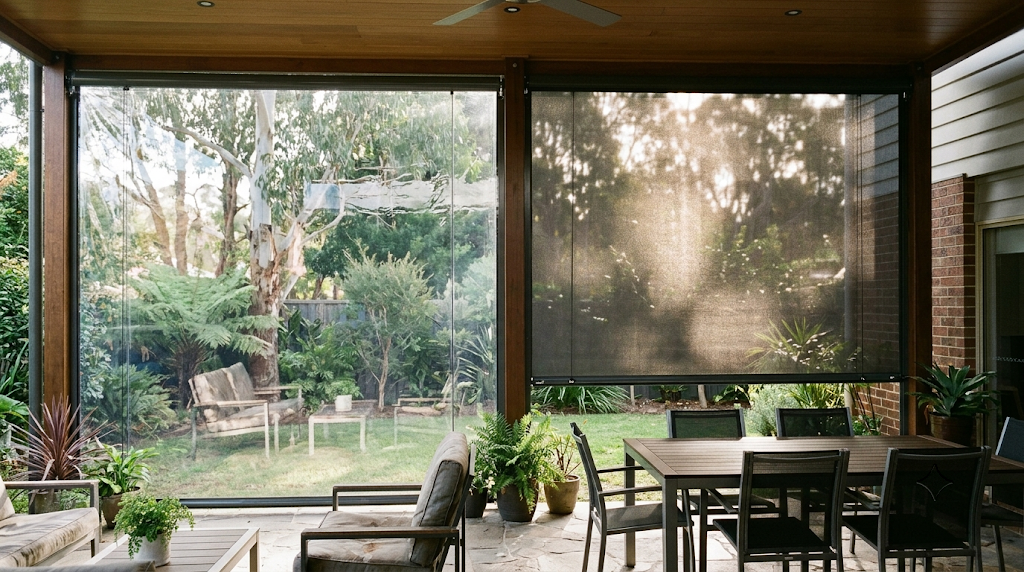
PVC and mesh solve different problems, so begin with how the space feels during the hours you actually use it. A sheltered patio used on cool evenings may benefit from PVC wind screening, whereas a sunny afternoon entertaining space may suit breathable mesh.
PVC and mesh solve different problems, so begin with how the space feels during the hours you actually use it. A sheltered patio used on cool evenings may benefit from PVC wind screening, whereas a sunny afternoon entertaining space may suit breathable mesh.
| What matters | Clear or tinted PVC | Sunscreen mesh |
| Garden views | Often clearer through transparent panels | Filtered through the fabric weave |
| Glare reduction | Varies by tint and specification | Common reason to choose it |
| Airflow | Restricted when fully lowered | Air can pass through the weave |
| Wind and light rain | Can help screen, depending on installation | Usually less protection from wind-driven rain |
| Privacy | Clear PVC offers limited privacy | Varies with openness and lighting |
| Care | Requires PVC-safe cleaning and drying | Requires fabric-appropriate cleaning |
Before committing, request samples large enough to assess in natural light. If privacy is crucial, check the view from outside after dark as well as during the day; a small showroom swatch cannot demonstrate every real-world lighting condition.
How Much Do Outdoor Blinds Cost in Melbourne?
As a broad 2026 guide, a basic installed PVC café blind may start at a few hundred dollars, while a larger motorised guided-track blind can cost well over $2,000. The figures below are indicative Australian-dollar market estimates per opening, not a fixed quotation or published price list for any particular installer.
| Blind type | Indicative installed cost | Best for |
| Manual PVC café blind | 300–700 | Budget-conscious sheltered patios |
| Manual sunscreen mesh blind | 450–950 | Glare and airflow control |
| Manual guided-track blind | 700–1,600 | Tighter edge control and custom openings |
| Motorised guided-track blind | 1,000–2,300+ | Convenient operation on larger openings |
PRICE NOTE: Estimates reflect publicly available 2026 Melbourne/Victorian guides; ranges vary substantially with size and specification. Confirm whether GST, standard installation, structural work and electrical connection are included in your particular quote.
For example, three manual guided-track blinds at an estimated 700–1,600 each suggest a preliminary budget of about 2,100–4,800. That is arithmetic for planning, not a quote: oversized openings, complex fixings, difficult access or additional work could push the total higher.
Why two quotes can look so different
Two suppliers may both describe a product as a “mesh outdoor blind” while specifying different fabrics, tracks, hardware and warranties. As a result, comparing the lowest headline price without checking inclusions can leave you with a misleading picture of value.
- Opening width and drop: larger panels need more material and sometimes different operating hardware.
- Material specification: fabric openness, colour, PVC grade and manufacturer warranty affect price.
- Operating system: straight-drop, guided-track, manual and motorised products are not equivalent.
- Mounting conditions: uneven frames, weak fixing points and unusual access can add work.
- Electrical work: hardwired motor systems may need a separately quoted registered electrical contractor.
- Finishing: headboxes, colour-matched tracks, controls and other accessories may be optional extras.
What should an outdoor blinds quote include?
Request an itemised, written quote that identifies the number of blinds, each opening’s dimensions, the fabric or PVC specification, model of the operating system and all installation inclusions. Also ask for exclusions, GST treatment, payment milestones, realistic lead times, warranty terms and the process for correcting a measurement or fitting issue.
Where possible, compare at least three quotes for the same dimensions and functional requirements. This makes it easier to identify whether a higher price reflects a better-suited system or merely a different scope.
7 Checks Before Choosing Outdoor Blinds in Melbourne
A good blind should suit the property as well as the person using it. These seven checks help identify practical problems while changes are still easy to make, rather than after the material has been cut and installed.
1. Check the direction of the sun
Work out which side of the house receives direct sunlight and at what time it becomes uncomfortable. Low western sun can shine beneath a pergola roof in the late afternoon, while north-facing exposure may create different seasonal shading needs.
If the blind will not intercept the troublesome light, ask for an on-site shade assessment before choosing fabric. Moving the blind position, selecting a suitable mesh or considering additional overhead shading may work better than choosing darker material alone.
2. Check wind exposure and the system’s limits
Look at whether nearby buildings shelter the patio or whether it faces an open garden, an elevated position or strong prevailing winds. A free-hanging blind in an exposed opening may move more than you expect, even when the fabric itself is high quality.
If suitability is uncertain, request the manufacturer’s wind-use guidance for the actual product dimensions and fixing method. Never assume that a track system, automatic sensor or heavier fabric means a blind can stay down during every Melbourne storm.
3. Check privacy, ventilation and the view
Decide which requirement comes first: keeping a clear view, reducing sunlight, improving daytime privacy or retaining airflow. PVC, mesh and darker fabrics perform differently, and the same mesh that screens a space by day may become easier to see through after dark.
If one material cannot meet all your priorities, compare combinations across different sides of the patio. Test samples in the intended space rather than relying on a product photograph, and check what neighbours can see when lights are on.
4. Check the opening and structural fixing points
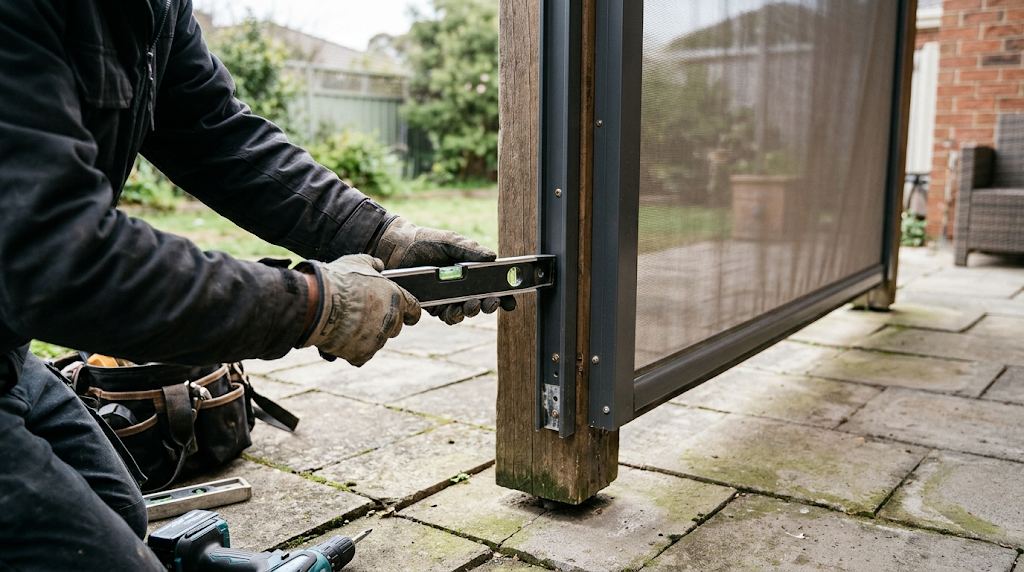
Measure the width and drop, but also look for out-of-square posts, uneven paving, projecting gutters and insufficient room for a cassette or side channel. A blind depends on secure fixings to a suitable structural element, not simply a neat-looking surface.
If the existing pergola or verandah framing is unsuitable, request a mounting solution or professional structural assessment before ordering. Where new support posts or footings are proposed, ground conditions and footing design may also need to be assessed; an ordinary blind on a sound existing structure does not automatically require soil testing.
5. Check rainwater drainage and patio slope
Watch where water travels during heavy rain: from the roof, across the deck and towards nearby doors. A sloping patio that directs runoff towards the house can remain vulnerable even after vertical blinds are fitted, and wind-driven rain may still enter around edges.
If water pools at the proposed bottom rail or against the building, address drainage before using blinds as a weather solution. Ask how the installation deals with gutters, water discharge and lower-edge gaps, and do not expect a standard blind to make the area watertight.
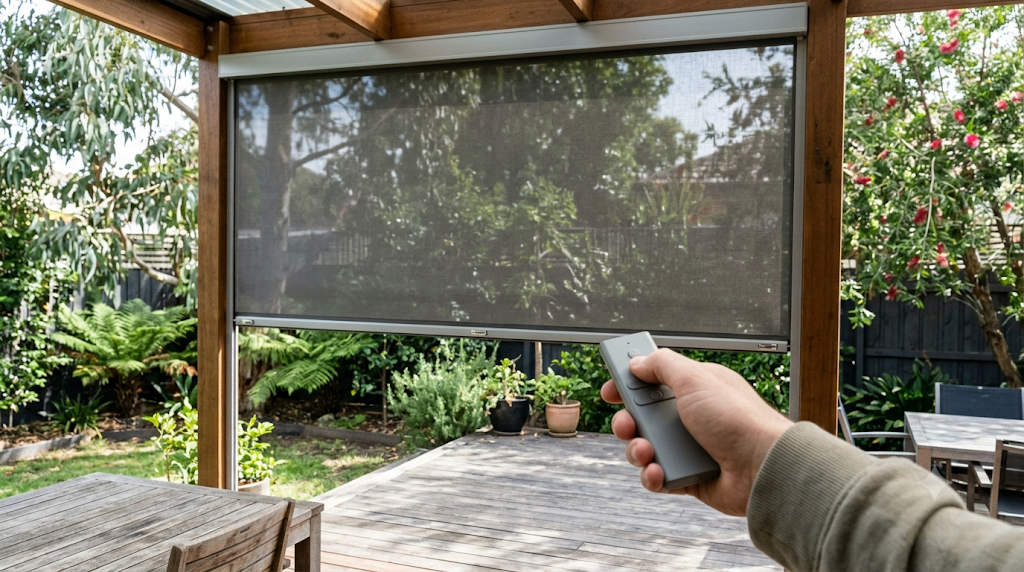
6. Check whether manual or motorised operation makes sense
Consider how often you will raise the blind, whether the control is accessible and whether multiple openings need operating together. A manual system can be perfectly practical for one patio drop, while a large or difficult-to-reach installation may make motorisation worthwhile.
If you choose hardwired operation, clarify who supplies and connects the power, where cables will run and what happens during a power failure. For electrical installation work in Victoria, engage a registered electrical contractor rather than treating wiring as a DIY extra.
Energy Safe Victoria advises homeowners to use a registered electrical contractor for electrical installation work.
7. Check approvals, written inclusions and warranty conditions
Before installation, determine whether the project changes an exterior appearance, affects common property or requires additional structural work. Some townhouses and apartments have owners corporation rules covering external blinds, while council and building requirements depend on the actual works proposed.
If approval is uncertain, contact the relevant owners corporation or council before signing. Then confirm that the quote lists the exact blind specification, installation scope, warranty limitations and any exclusions for wind damage, maintenance or electrical components.
For broader planning guidance, consult Consumer Affairs Victoria’s outdoor home building checklist and ask your local council whether permits apply to your proposed works.
Outdoor Blinds vs Outdoor Awnings in Melbourne: Which Works Better?
Outdoor blinds screen vertical openings, and outdoor awnings, however, provide shade from a projecting or overhead structure. That distinction matters because a vertical blind cannot replace a roof over an uncovered deck, and an overhead shade awning may not stop low-angle sunlight entering from the side.
If your patio already has a roof but needs better glare or wind control, outdoor blinds are usually the first category to assess. However, if the area lacks overhead shade, external awnings in Melbourne, including retractable designs, may be better suited to the job.
Folding arm and retractable awnings
A folding arm awning projects outward to create shade over an open terrace or deck, then retracts when not required. When comparing folding arm awnings in Melbourne, check the required projection, fixing structure, fabric and wind-load instructions rather than selecting on width alone.
Explore folding arm awnings if your problem is overhead exposure rather than an open pergola side.
Motorised awnings and retractable roofs
Motorised awnings in Melbourne provide convenient operation on compatible outdoor awning systems, but motors and weather sensors do not remove the need to follow operating limits. Similarly, a retractable roof in Melbourne is a separate overhead product that may require more substantial planning and a different budget from an outdoor blind.
Compare awning motorisation and retractable pergola and sunroof systems if you are weighing up overhead shade alongside vertical screening.
For homeowners researching retractable awnings Melbourne-wide, the key question is not which product has the longest list of features. It is which solution blocks the exposure affecting your space at the hours you use it, with a fixing and operating arrangement that suits the property.
What Happens During Measuring and Installation?
Custom outdoor blinds need more than a quick width measurement. A worthwhile site visit should identify the surfaces available for fixing, the available space for hardware, obstacles and how you intend to operate the finished system.
- Initial discussion: Describe the areas you want to shade, your preferred budget and any privacy or weather concerns.
- Site measurement: Confirm each opening, frame condition, required clearances and suitable mounting points.
- Written specification: Select material, colour, operating mechanism and optional extras; check the total quote.
- Installation and demonstration: Inspect alignment, check smooth operation and learn correct wind and cleaning procedures.
If you still haven’t made up your mind, you may review the range of custom awnings and blinds before the measure-and-quote appointment.
How to Maintain Outdoor Blinds in Melbourne
Outdoor blinds are exposed to dust, moisture, insects and UV, so routine maintenance matters. Fortunately, most upkeep begins with sensible cleaning and correct operation rather than specialised equipment.
- Brush off loose dust and debris, then use a cleaner approved for the particular PVC or mesh fabric.
- Avoid abrasive brushes, harsh solvents and high-pressure cleaning unless specifically authorised by the manufacturer.
- Allow wet fabric to dry as instructed before leaving it rolled away for extended periods.
- Keep side tracks free of debris and report rough movement rather than forcing a jammed blind.
- Follow the product’s wind and rain guidance; do not leave the blind deployed beyond its rated conditions.
Ask the installer for care instructions in writing, including what warranty coverage may be affected by incorrect cleaning or storm use. There is no reliable single lifespan for all outdoor blind systems, so product-specific documentation is more useful than a generic promise.
Frequently Asked Questions About Outdoor Blinds
Indicative installed prices may range from around 300–700 for basic manual PVC café blinds to 1,000–2,300 or more for motorised guided-track systems. Actual pricing depends on dimensions, materials, mounting conditions and what the written quote includes.
PVC is often useful for preserving a clearer view and reducing draughts, while mesh is generally chosen for glare reduction and airflow. Neither is universally better, so compare them against the way you use your patio.
Track-guided systems can be worth considering where controlled edges, easier operation and a tailored fit matter. The benefit depends on the specific system, installation quality and exposure, so check the manufacturer’s technical limitations rather than relying on the product name.
No standard outdoor blind should be assumed to make a patio fully weatherproof. A suitable PVC or track-guided blind may reduce wind and light-rain exposure, but runoff, gaps and wind-driven rain can still affect the space.
They may be able to, particularly when the space behind the blind is brightly lit. Privacy depends on fabric openness, distance and lighting, so test samples from the outside after dark before making a final choice.
Manual blinds are often sufficient for small, reachable openings and usually have lower upfront costs. Motorisation may be more convenient for large or frequently operated blinds, provided you also budget for controls, power and servicing.
Not every standard blind installation needs a permit, but requirements depend on the proposed works and property. Check with your council where structural or planning issues may arise, and seek owners corporation guidance for affected apartments or shared buildings.
Lifespan depends on fabric, UV and wind exposure, frequency of use, cleaning and the hardware selected. Check the specific warranty and maintenance documentation instead of treating a general lifespan estimate as a guarantee.
Find the Right Outdoor Blinds for Your Melbourne Home
The right outdoor blinds should make your patio easier to use, not introduce a new problem with glare, ventilation, drainage or awkward operation. By comparing materials, understanding installed costs and checking the property itself, you can choose a practical solution with fewer surprises.
If you are weighing up PVC, sunscreen mesh or a guided-track system, a measure-and-quote appointment is a useful next step. Also, bring photographs of the space, approximate opening dimensions and your preferred budget so you can discuss the most suitable options without committing to a one-size-fits-all product.