If your Melbourne patio is lovely in the morning but too sunny by afternoon, you may be looking for shade that adapts as the day changes. A shade runner is a retractable shade sail system that moves along stainless-steel support wires using marine-grade pulleys. The best part is that you can extend it when you want shade and retract it when you would prefer more open sky. However, whether it suits your home depends on your outdoor layout, fixing points, fabric preference, and how you plan to use the space.
Reliable suppliers of awnings in Melbourne offer a range of outdoor shading systems, so you can compare the shade runner with other options before making a decision. This guide explains how the system works, what to consider before installation, how it differs from other awnings, and which questions to ask when requesting a quote.
What Is a Shade Runner Retractable Shade Sail?
A shade runner combines the look of a fabric shade sail with a mechanism that allows the canopy to move between an extended and retracted position. Unlike a conventional fixed shade sail, it does not have to remain in the same position whenever it is installed.
The fabric gathers into a stack as the system retracts. When extended, it creates overhead shade across the area covered by the installed system. This can be useful for homeowners who want flexibility over a patio, deck, courtyard, or suitable pergola area without committing to a permanently covered roof.
The amount of coverage, the fabric selected, and the mounting arrangement depend on the individual design. However, a site assessment is important because a system that works well in one backyard may not suit another home’s structure or layout.
How Does a Shade Runner System Work?
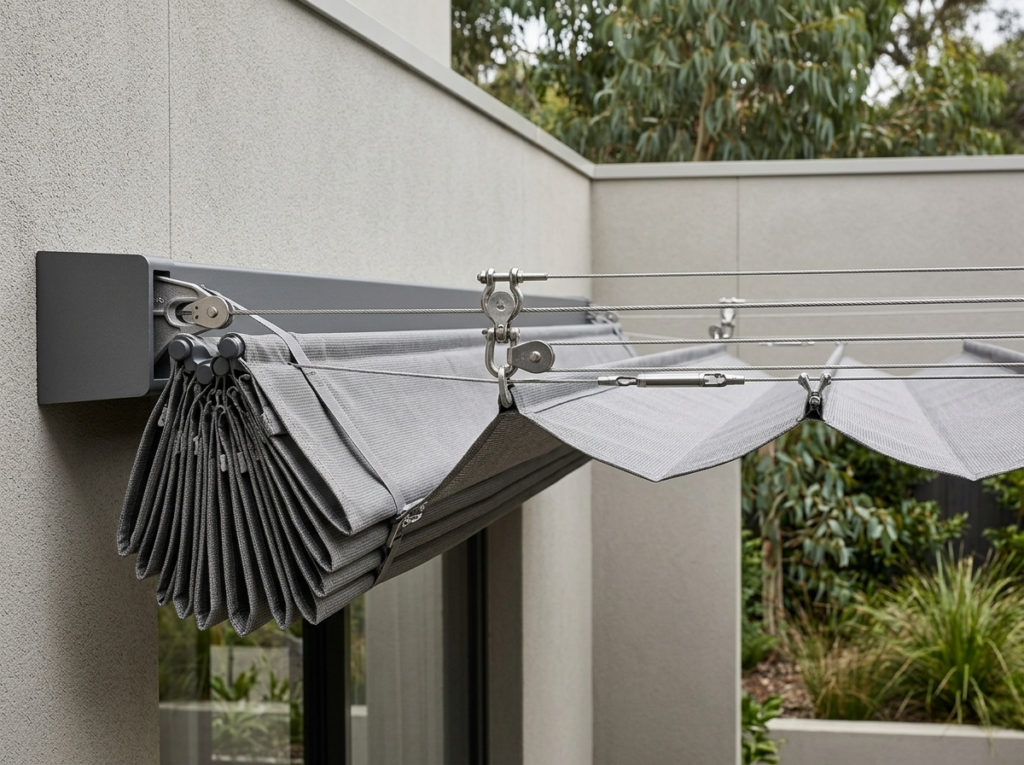
The shade runner uses a set of support wires and marine-grade pulleys to guide the fabric as it opens and closes, and aluminium cross-supports help support the canopy. Manual operation is available through a control cord, while motorised configurations may also be available, depending on the system specification.
The manufacturer lists flexible fixing options, including suitable posts, walls, fascias and frames. However, consider these as possibilities rather than a guarantee that every existing structure can carry the system. Fixing locations, dimensions, clearances and structural capacity need to be assessed before the installation is confirmed.
Is a Shade Runner Right for Your Melbourne Home?
A retractable shade sail may suit a home where the occupants want to control how much overhead shade they have. Think about how the area is used throughout the day, where the sun enters the space and whether you want to uncover the area when the weather or occasion calls for it.
Patios, decks and courtyards
An open patio or courtyard can be a good candidate if there is room for the fabric to travel and suitable points to support the system. Before choosing a design, consider outdoor dining furniture, walking routes, doors, windows, gutters and any nearby trees because these details may affect the usable area and the position of the retracted fabric stack.
Existing pergolas and outdoor structures
A suitable existing pergola or frame may provide a mounting option, but its appearance alone does not establish that it is structurally adequate. Ask for the proposed fixing points and any required structural assessment to be clarified before proceeding.
Melbourne sun and changing weather
Flexible shade can be useful when you want to change the balance between sun and shade. However, retractability does not make a fabric canopy suitable for every weather condition. You must follow the operating instructions and retract the system when required, particularly when strong winds or storms are forecast.
For general information about UV exposure, the Australian Radiation Protection and Nuclear Safety Agency provides an Australian guide to ultraviolet radiation. However, you must remember that shade is one part of sun protection; it does not remove the need to consider other sun-safe measures.
Shade Runner vs Fixed Shade Sails vs Folding Arm Awnings
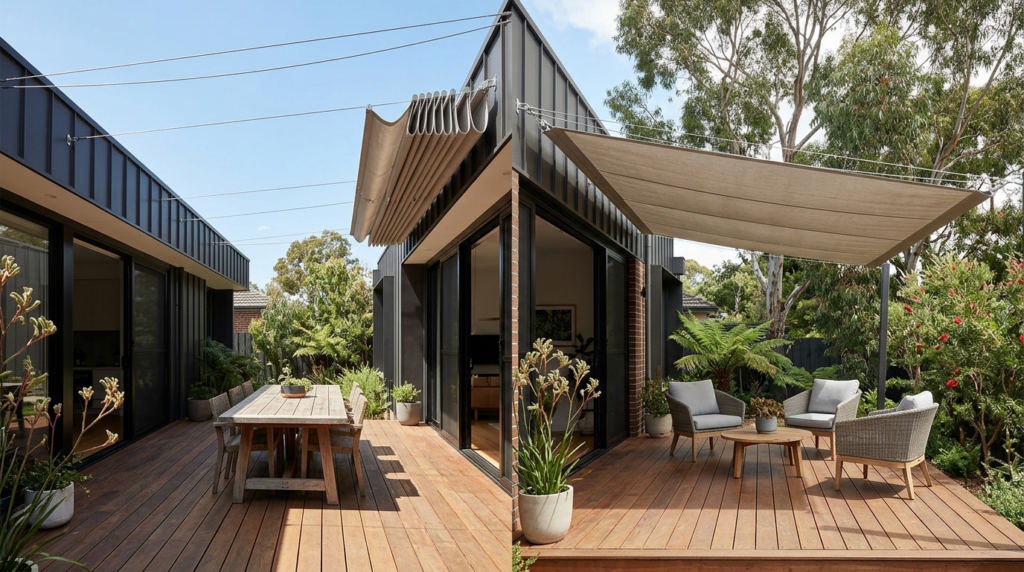
These products all provide shade, but they work differently. The best option depends on the area to be covered, the available mounting points, your preferred appearance, and whether you want to adjust the shade throughout the day.
| Consideration | Shade Runner | Fixed shade sail | Folding arm awning |
| Shade adjustment | Fabric retracts along support wires | Remains in a fixed position | Extends and retracts on folding arms |
| Typical application | Suitable for open patios, decks and courtyards | Areas needing permanent shade | Patios and alfresco areas projecting from a wall |
| Support requirements | Suitable fixing points and support wires | Suitable anchors or posts | Suitable wall or structural mounting |
| Operation | Manual or motorised, depending on configuration | Usually no operating mechanism | Manual or motorised, depending on model |
| Main consideration | Wire layout, fabric stack, mounting and weather limits | Fixed coverage and anchor design | Wall suitability, projection and wind exposure |
A shade runner may be worth considering when adjustable overhead coverage is a priority. However, a fixed shade sail may suit an area where permanent shade is preferred. On the other hand, folding arm awnings in Melbourne can be worth investigating when the desired coverage projects from a suitable wall and unobstructed space beneath the awning matters. Compare the actual configurations rather than assuming one product is always superior.
Also, popular awning suppliers in Melbourne offer outdoor awnings and other shading systems in Melbourne, including retractable pergola and sunroof systems. These may be relevant alternatives when the desired coverage, roof function, or structure differs from what a retractable shade sail can provide.
How Much Does a Shade Runner Cost in Melbourne?
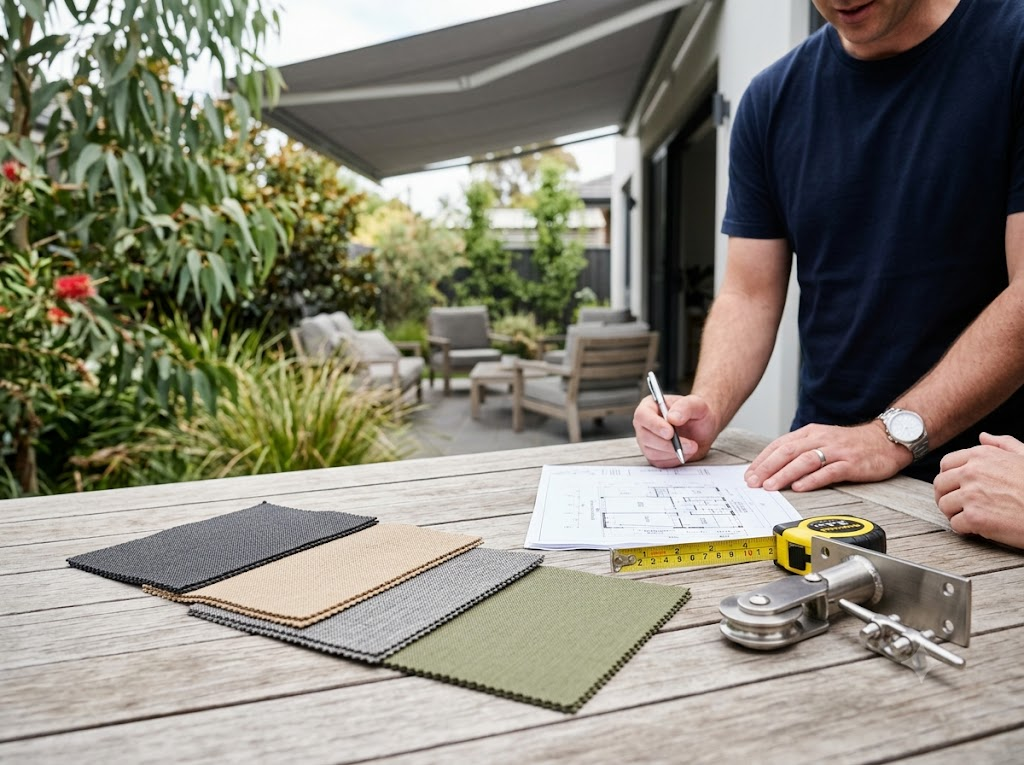
The installed cost of a shade runner depends on the proposed system and the conditions at the property. So, a reliable price should be based on the actual dimensions, chosen materials, fixing requirements, and installation scope rather than a generic price for all homes.
When comparing quotes, ask whether the price includes the fabric and operating mechanism, support wires, brackets and fixings, any required posts or structural work, installation, controls, and applicable warranty documentation. Also, clarify exclusions before comparing one quote with another.
What affects the installed cost?
- Dimensions: The width and extension determine the size and configuration of the system.
- Fabric: The selected material, colour and performance requirements influence the specification.
- Operation: Manual and motorised arrangements have different components and requirements.
- Mounting: Existing fixing points, posts, frames and any structural work can affect the scope.
- Site access: Access and installation complexity may affect labour and equipment requirements.
- Optional controls: Remote controls and compatible sensors may add to the specification.
You may also request a site-specific measure and quote, with the proposed system and inclusions clearly documented for the best purchasing experience.
Fabric Choices, Rain Protection and Weather Limitations
Fabric choice should reflect what you want the system to do. Shade mesh, acrylic canvas and waterproof PVC are not interchangeable in every respect. Their light transmission, water resistance, appearance, and maintenance requirements can differ. Confirm which materials are available for the configuration being quoted and ask for the current product documentation.
If rain protection is important, ask specifically about the waterproof fabric option, the required fall for drainage, and where water will run off. Because a fabric described as water-resistant should not automatically be treated as waterproof, and a retractable shade sail is also not the same as a fully enclosed, engineered roof system.
Installation, Maintenance and Council Considerations
Before installation, measure the intended area and consider the sun’s direction at the times you most want shade. Discuss the available mounting points, structural capacity, clearances and the position of the retracted fabric. Ask whether any additional structural assessment or other site work is required.
Approval requirements may vary with the property and the relevant council. So, check with the relevant local council if you are unsure whether the proposed installation requires approval. For routine care, you may follow the manufacturer’s instructions for the selected fabric and hardware.
Shade Runner Buyer Checklist
Before requesting a quote, check these six points. They help establish whether a retractable shade sail is appropriate and make the discussion with an installer more productive.
- Space: Measure the area you want to shade and identify nearby doors, windows, gutters, and obstacles.
- Sun: Note the times of day when direct sunlight is most uncomfortable.
- Structure: Identify possible fixing points, but have their suitability assessed rather than assuming they are adequate.
- Fabric: Decide whether filtered shade or a waterproof fabric option is the priority.
- Operation: Consider whether manual operation is suitable or whether a compatible motorised configuration is preferable.
- Quote: Request written details of dimensions, inclusions, exclusions, installation requirements and warranty terms.
Quick answer: A shade runner is worth investigating if you want adjustable overhead shade and your outdoor space has suitable mounting options. If you need permanent coverage, a different projection, or a more complete roof, compare the relevant alternatives before deciding.
Frequently Asked Questions About Shade Runner Systems
A shade runner is a retractable shade sail system that travels along support wires using marine-grade pulleys. Its fabric can be extended for shade or retracted to open up the area.
Motorised configurations are available, subject to the product’s dimensions and specification. Confirm the suitable motor and controls for your proposed installation.
Waterproof fabric options are available, but not every fabric provides the same rain protection. Confirm the selected fabric, required slope and drainage arrangements with the installer.
It may be possible if the pergola has suitable dimensions, fixing points and structural capacity. The structure should be assessed before installation is confirmed.
Requirements depend on the installation and relevant council. Check the requirements for your property before proceeding rather than assuming approval is never needed.
The best way is to follow the manufacturer’s care instructions. Generally, it is advisable to clean the fabric with mild detergent and water, typically around every 12 months, and the system should be checked for signs of damage.
It depends on the space and how you want the shade to operate. A shade runner moves along support wires, while a folding arm awning projects from a suitable wall or structure using folding arms.
Explore Shade Runner Options with Melbourne Awnings
The right shading system should fit the way you use your outdoor space, not just look good in a product photograph. So, consider your preferred coverage, mounting points, fabric requirements, and operation before deciding.
Melbourne Awnings can help you explore the available options. Visit the product page, or contact the team to discuss a measure and quote.