A good shade awning does not just look great on a Melbourne home – it actively stops solar heat before it punches through your windows and turns your lounge room into a sauna. That is the short answer. The longer one? Melbourne’s climate genuinely demands external shading in a way that few other Australian cities do. Between scorching north-facing afternoons, brutal west-facing sunsets, and that classic Melbourne trick of 40-degree heat followed by a cool change, your home needs something smarter than a set of indoor curtains.
So whether your alfresco is getting hammered by afternoon sun, your pergola needs serious UV protection, or your west-facing bedroom window is unbearable by 3pm – this guide breaks it all down. Clearly, practically, and with no fluff.
Why Melbourne Summers Demand Proper Shading
Melbourne regularly records temperatures above 38 degrees during summer. The Bureau of Meteorology reports that Melbourne frequently experiences intense heatwaves, with January and February averaging multiple days above 35 degrees each year—though cities like Darwin, Brisbane, Perth, and Adelaide historically record more total days of extreme heat.
That heat does not just make your deck uncomfortable. It drives solar radiation straight through unshaded glass, pushing indoor temperatures up by 8 to 10 degrees in exposed rooms. Then your air conditioner runs harder, longer, and costs you more.
Verified Fact – Australian Government YourHome
Up to 87% of a home’s heat gain in summer enters through windows and glazing. External shading is the single most effective way to stop this heat at the source.
Source: Australian Government YourHome – Shading
Melbourne homeowners are increasingly turning to external shade awnings as a practical, permanent solution. It is not just about comfort. It is about protecting your investment, reducing energy bills, and extending the usability of your outdoor spaces year-round.
How a Shade Awning Actually Stops the Heat
Here is the key thing most people miss. An internal blind traps heat after it has already passed through the glass. By then, that solar energy is inside your home. An external shade awning stops the radiation before it ever reaches the glass.
Think of it like this. Wearing a hat in summer is far more effective than trying to cool down after standing in direct sun for an hour. The same logic applies to your windows and walls.
The physics here is straightforward. Solar radiation hits your awning fabric. The fabric absorbs and deflects that energy. Significantly less heat reaches the glass below. The room stays cooler naturally, reducing how often your air conditioner needs to run.
Furthermore, many quality awning fabrics also manage reflected light. They reduce glare without blocking your view entirely. That is particularly useful for living rooms and home offices where screen glare becomes a daily frustration each Melbourne summer.
West-Facing Windows: Melbourne’s Hottest Problem
If you have ever sat in a west-facing room at 4pm on a 38-degree Melbourne day, you already know the pain. That late afternoon sun is low, relentless, and unforgiving. It hits rooms that north-facing shading does absolutely nothing to protect.
West-facing windows are consistently the most problematic in Melbourne homes. The sun tracks low across the western sky from about 2pm onward, blasting directly at eye level into living rooms, kitchens, and bedrooms.
A folding arm awning or a drop arm awning installed on a west-facing window or wall makes a dramatic difference. Extended from around midday, it blocks that low-angle afternoon sun before it reaches the glass. Retracted in the evening or during winter, it lets the warm afternoon sun through when you actually want it.
That flexibility is what makes retractable shade awnings so well-suited to Melbourne’s unpredictable weather patterns. You get sun when you want it and shade when you need it.
Choosing the Right Type of Shade Awning for Your Home
Not every shade awning works for every situation. Melbourne homes vary enormously – from inner-city terraces to sprawling suburban alfresco setups. Here is a practical breakdown of the main options and where each one shines.
Folding Arm Awnings
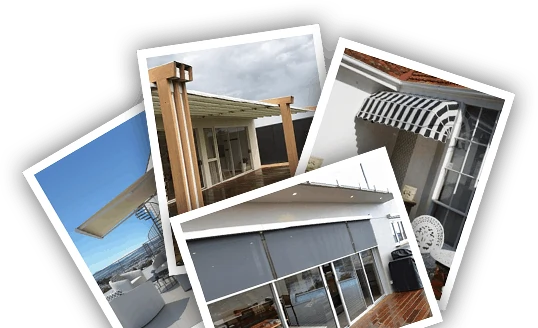
These are the most popular retractable option for Melbourne patios and decks. They extend outward on articulated arms without needing any front support posts. This makes them ideal for entertaining areas where you want unobstructed space beneath.
They retract fully when not in use, protecting the fabric from Melbourne’s winter winds. Explore the full range on the Folding Arm Awnings page.
Canopy Awnings
A canopy awning provides fixed overhead coverage. It suits entries, shopfronts, and areas needing permanent shade. These are robust and handle Melbourne’s variable weather conditions reliably year-round.
Drop Arm Awnings and Window Awnings
For west-facing windows in particular, drop arm awnings and window awnings are purpose-built. They mount directly above the window and angle downward. This geometry is specifically designed to intercept low-angle afternoon sun.
Sunscreen Blinds and Sunblinds
Sunscreen blinds and sunblinds suit pergolas and alfresco areas needing vertical or angled coverage. They filter light while maintaining outward visibility – genuinely useful for dining areas where you want to see the garden without squinting.
| Awning Type | Best For | Retractable? | Suits West-Facing? |
|---|---|---|---|
| Folding Arm Awning | Patios, decks, alfresco | Yes | Yes |
| Canopy Awning | Entries, fixed coverage areas | No (fixed) | Partially |
| Drop Arm Awning | Windows, low-angle sun | Yes | Excellent |
| Window Awning | Smaller windows, bedrooms | Fixed / Semi | Yes |
| Sunscreen Blind | Pergolas, alfresco dining | Yes | Yes |
| Retractable Pergola System | Full pergola coverage | Yes | Yes |
Shade Awning Fabric, UV Ratings, and What to Look for in Australia
Not all awning fabrics are equal. This matters a lot in Melbourne and across Australia, where UV radiation levels are among the highest in the world. Choosing the wrong fabric means faded colour within two seasons and compromised UV protection from day one.
The UPF 50+ Standard
Look for fabrics rated UPF 50+ under Australian Standard AS/NZS 4399. A UPF 50+ rating blocks more than 98% of UV radiation. For context, the Cancer Council Australia recommends UPF 50+ for any outdoor shade structure.
Verified Fact – Cancer Council Australia
Australia has one of the highest rates of UV radiation globally. The Cancer Council recommends shade structures rated UPF 50+ to provide meaningful UV protection for people spending extended time outdoors.
Source: Cancer Council Australia – Shade
Solution-Dyed Acrylic Fabrics
For Australian conditions, solution-dyed acrylic is the go-to fabric type. Brands like Sunbrella and Dickson produce solution-dyed acrylic fabrics where the colour pigment is embedded in the fibre itself – not printed on top. This makes fading far less likely over years of direct Australian sun exposure.
Polyester-based fabrics are cheaper upfront. However, they degrade faster under UV, lose colour within a few seasons, and can become brittle. For Melbourne’s intense summer radiation, acrylic is the smarter long-term investment.
Explore the full range of awning fabrics available through Melbourne Awnings to find the right specification for your project.
Openness Factor in Sunscreen Fabrics
For sunscreen and mesh fabrics, pay attention to the openness factor. A 1% openness provides maximum heat blockage with minimal view. A 10% openness gives more outward visibility but less heat control. For west-facing applications in Melbourne, a 3-5% openness factor typically balances view and heat reduction effectively.
Shade Awnings for Your Pergola or Patio in Melbourne
Your pergola or patio should be an asset during Melbourne summers – not an obstacle. Yet without proper shading, these spaces sit unused from November through March because they are simply too hot to enjoy.
The good news? Modern shade awning solutions are specifically designed to work with existing pergola structures. You do not need to demolish or rebuild anything. Instead, systems like retractable pergola and sun roof systems integrate directly with your existing framework.
Retractable Roof Systems for Pergolas
A retractable roof system sits above your pergola and extends on demand. It provides waterproof or UV-blocking coverage overhead when deployed, then retracts fully on cooler days to let natural light through. This is particularly popular in Melbourne’s alfresco dining culture, where outdoor entertaining is a year-round aspiration.
Vertical Sunscreen Blinds for Side Exposure
Even a covered pergola needs side protection from afternoon sun. West and north-facing openings still allow enormous amounts of low-angle radiation into a shaded pergola space. Adding sunscreen mesh blinds on the exposed sides gives you control over airflow, glare, and heat without fully enclosing the space.
“Great service from Ivan at Melbourne Awnings on our pergola shade. Highly recommended!”
– Robert Begg, 05/01/2021
If you are in the planning stage, the display centre at Gardenvale is worth a visit. You can see full-size product demonstrations and get an expert recommendation for your specific pergola setup and sun exposure.
Motorised Shade Awnings: Smart Shading for Melbourne Homes
Manual awnings are perfectly functional. But motorised systems take usability to an entirely different level – and in Melbourne’s rapidly changing weather, that convenience genuinely matters. When a cool change rolls through at 4pm and the wind picks up suddenly, the last thing you want is to manually crank an awning in across a 20-metre patio.
Somfy and Becker Motor Systems
Melbourne Awnings offers awning motorisation using premium European systems from Somfy and Becker. These are the global gold standard for awning automation. Both brands offer whisper-quiet motors with variable speed control and exceptional reliability over thousands of cycles.
Sun and Wind Sensors
The real advantage of a motorised shade awning becomes clear when you add automation sensors. A sun sensor deploys the awning automatically when UV intensity exceeds a set threshold. A wind sensor retracts it when gusts exceed a safe level – protecting both the fabric and the frame.
In Melbourne, where a calm 35-degree morning can become a 60km/h southerly afternoon in three hours, this automation is not a gimmick. It is genuinely practical protection for your investment.
Smart Home Integration
Somfy and Becker systems integrate with major smart home platforms including Google Home, Amazon Alexa, and Apple HomeKit. You can control your shade awning by voice, via a smartphone app, or through pre-set schedules. Some Melbourne homeowners set automated morning and afternoon schedules that match their typical summer sun exposure patterns.
Energy Savings from a Shade Awning You Can Actually Measure
This is where many guides get vague. Let us be specific instead.
The Australian Government’s YourHome guide states that external shading can reduce summer cooling loads by up to 40% in well-shaded homes. That translates directly to air conditioning runtime and energy costs.
Verified Fact – Australian Government YourHome
External window shading can reduce the cooling energy requirement of a home by up to 40%. This is significantly more effective than internal shading solutions because heat is blocked before it enters the building envelope.
Source: Australian Government YourHome – Shading
Beyond running costs, there is the matter of equipment wear. An air conditioner running fewer hours per day lasts considerably longer before requiring servicing or replacement. Over a 10-year period, the combined energy and maintenance savings from proper external shading often comfortably exceed the initial awning investment.
Furthermore, a well-designed shade awning also contributes positively in winter. Retracted on clear winter days, it lets the low northern sun directly warm your home through the glass. This passive solar gain reduces heating requirements and energy costs during the cooler months too.
External Shade Awning vs Internal Blinds: Why Outside Wins
There is a persistent misconception that a good set of internal blockout blinds provides similar protection to an external shade awning. It does not. The difference is not marginal – it is fundamental.
When sunlight passes through glass, the energy converts to heat inside the room. An internal blind then traps that heat between the glass and the blind fabric. The room is warmer than if you had no blind at all in some cases, because the convective air in that gap circulates the accumulated heat inward.
An external shade awning, by contrast, stops the radiation at the source. Before it reaches the glass. Before it converts to room heat. This is why the Australian Window Association consistently ranks external shading as the most effective passive cooling strategy for residential buildings.
| Feature | External Shade Awning | Internal Blockout Blind |
|---|---|---|
| Stops heat before glass | Yes | No |
| UV protection outdoors | Yes | No |
| Protects outdoor furniture | Yes | No |
| Works with open windows | Yes | No |
| Extends outdoor living space | Yes | No |
| Visible from street (kerb appeal) | Positive aesthetic | Not visible |
| Heat reduction effectiveness | Up to 90% | Up to 45% |
| Initial investment | Higher | Lower |
| Long-term energy saving | Significant | Moderate |
Additionally, an external shade awning lets you leave windows open on hot days for natural ventilation. With internal blinds, you close the blind or lose its effectiveness. Opening windows with an awning in place is perfectly fine – you get shade, airflow, and cooling without the heat gain.
Keeping Your Shade Awning in Shape Through Melbourne’s Weather
Melbourne weather is, to put it plainly, absolutely chaotic. A shade awning that handles 38-degree summer days, 100km/h storm gusts, and a random June hailstorm needs proper care to perform year after year.
Seasonal Maintenance Tips
- Clean the fabric twice yearly: Use mild soap and lukewarm water. Rinse thoroughly. Avoid pressure washers, which can damage the fabric coating and compromise UV performance.
- Retract during storms: Never leave a retractable awning extended during high winds. Melbourne’s southerly busters can arrive quickly. A motorised system with a wind sensor handles this automatically.
- Check the frame annually: Look for any signs of corrosion on powder-coated aluminium components, particularly near the mounting brackets. Address any issues promptly to prevent structural failure.
- Lubricate moving parts: The folding arm pivot points and motor coupling benefit from a light silicone-based lubricant applied annually. This prevents squeaking and extends the operational life significantly.
- Store or retract for extended winter periods: If your awning will not be used for several weeks, retract it fully and leave it retracted. This protects the fabric from unnecessary UV exposure and reduces wind damage risk during winter storms.
When to Replace the Fabric
Quality solution-dyed acrylic fabrics typically last 10 to 15 years under Melbourne conditions. Signs of replacement time include visible fading beyond normal weathering, fabric brittleness, or loss of water resistance. Importantly, you can often replace only the fabric while retaining the existing frame – a much more cost-effective option than full awning replacement.
Frequently Asked Questions About Shade Awnings in Melbourne
How much heat does a shade awning actually block from entering a room?
A quality external shade awning can block up to 90% of solar heat before it reaches the glass. The Australian Window Association confirms that external shading is significantly more effective than internal blinds. It stops heat at the source, outside the glass entirely.
What is the difference between a shade sail and a shade awning?
A shade sail is a freestanding tensioned fabric panel anchored to poles or fixed points. A shade awning mounts directly to a building wall or fascia and typically retracts. Awnings offer more precise sun control, better integration with your home’s architecture, and greater durability against Melbourne’s variable winds.
Are shade awnings effective on west-facing windows in Melbourne?
Absolutely yes. West-facing windows receive the most intense afternoon sun in Melbourne. A properly sized shade awning with UPF 50+ rated fabric can reduce solar heat gain through those windows by up to 90%. Drop arm awnings and window awnings are specifically designed for this low-angle afternoon sun geometry.
Do shade awnings reduce air conditioning costs in Australian homes?
Yes. The Australian Government’s YourHome resource states external shading reduces summer cooling loads by up to 40%. Less solar heat entering the home means your air conditioner runs less often, cutting energy bills and extending equipment life. The long-term savings often exceed the installation cost.
What UV rating should I look for in a shade awning fabric?
Look for fabrics rated UPF 50+ under Australian Standard AS/NZS 4399. This rating blocks over 98% of UV radiation. The Cancer Council Australia recommends UPF 50+ for outdoor shade structures. Most premium solution-dyed acrylic fabrics from brands like Sunbrella and Dickson meet this standard.
Can a shade awning be used on a pergola that already has a roof?
Yes. A retractable pergola system or vertical sunscreen blind works alongside an existing pergola roof to manage side sun, low-angle afternoon light, and airflow. These products are purpose-built for integration with existing structures. You do not need to replace or modify your current pergola framework.
How do I choose between a retractable and fixed shade awning for my patio?
Choose a retractable awning if you want flexibility across Melbourne’s unpredictable weather. It provides shade in summer and can be retracted to allow winter sun through. Choose a fixed canopy awning if the area needs permanent, year-round coverage and you prefer a more structural, architectural look.
Are shade awnings a permanent fixture or can they be removed seasonally?
Retractable shade awnings are designed for seasonal flexibility. Extend them fully through summer and retract them during winter. Fixed canopy awnings are a more permanent installation, though professional removal is possible. Retractable options are ideal for Melbourne’s four-season climate variability.
What is the most durable shade awning material for harsh Australian summers?
Solution-dyed acrylic fabric is the most durable choice for Australian conditions. Brands like Sunbrella and Dickson embed colour pigment directly into the fibre, making it far more resistant to UV degradation and fading than polyester alternatives. These fabrics typically last 10 to 15 years under Melbourne conditions with proper care.
Will a shade awning prevent fading on my outdoor furniture and flooring?
Yes. By blocking direct UV radiation, a UPF 50+ rated shade awning significantly slows UV-induced fading on outdoor furniture, decking, and flooring materials. It will not eliminate all fading but substantially reduces the rate. This protects your outdoor investment and reduces replacement frequency.
How long do shade awnings last in Melbourne’s climate?
A quality shade awning with solution-dyed acrylic fabric and a powder-coated aluminium frame typically lasts 10 to 15 years in Melbourne conditions when properly maintained. Fabric can often be replaced independently of the frame, making this a cost-effective long-term shading solution.
Do I need council approval to install a shade awning in Melbourne?
In most cases, standard shade awnings fall under exempt development in Victoria. However, requirements vary by council zone, heritage overlay, and property type. Always verify with your local Melbourne council or speak with a licensed installer before proceeding. Melbourne Awnings can advise on typical permit requirements during your consultation.
Can motorised shade awnings work with smart home systems?
Yes. Somfy and Becker motor systems integrate with Google Home, Amazon Alexa, and Apple HomeKit. Automated sun and wind sensors can deploy or retract the awning based on real-time conditions. This is particularly practical in Melbourne, where weather can change dramatically within a few hours during summer.
The Bottom Line on Shade Awnings for Melbourne Homes
A well-chosen shade awning is one of the smartest investments you can make in a Melbourne home. It solves multiple problems at once – summer heat, UV exposure, outdoor comfort, energy costs, and furniture protection – without requiring major construction or renovation.
The key is choosing the right system for your specific exposure. West-facing windows need drop arm or window awnings. Open patios and decks suit folding arm awnings. Pergolas benefit from retractable roof systems or vertical sunscreen blinds. And for real convenience in Melbourne’s changeable climate, motorisation with Somfy or Becker systems makes everything effortless.
Furthermore, the fabric quality you choose matters enormously over the long term. Insisting on UPF 50+ rated, solution-dyed acrylic fabric means your awning still looks great and performs properly after years of Melbourne summers.
If you have read this far and you are still deciding, here is an honest suggestion. Pop into the Melbourne Awnings display centre on Gardenvale Road. See the products at full size, feel the fabric quality, and have a genuine conversation about your home’s specific sun exposure. That kind of expert advice is exactly what makes the difference between a shade awning you love and one you regret.
Since you have made it all the way here – reckon you deserve a shortcut. Jump straight to Melbourne Awnings and poke around. There is a good chance the exact solution you have been imagining is already sitting there, waiting for your alfresco to finally enjoy it.