What Is a Retractable Roof System?
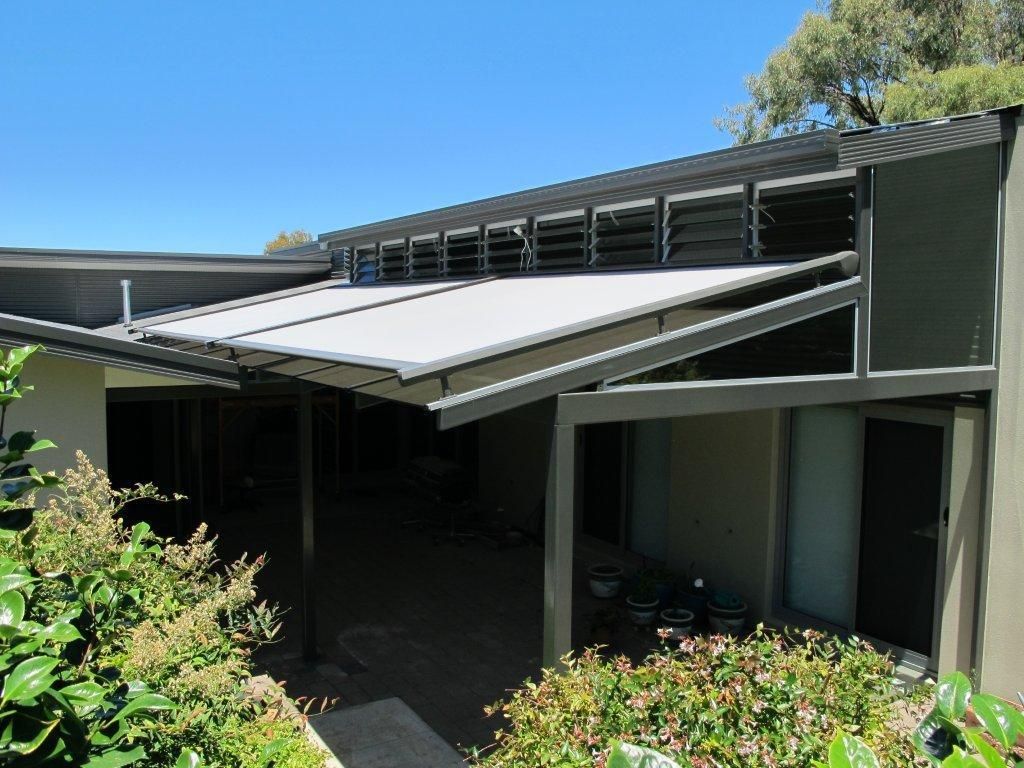
A retractable roof is exactly what the name suggests — a shade or weather-protection system that covers the top of a pergola, patio, or alfresco structure and can be opened or closed on demand. Unlike a fixed pergola roof (which is permanent and rigid), a retractable system uses a fabric panel that retracts into a cassette housing or folds back along a track when you want full open-sky access, then deploys to provide shade, UV protection, or rain cover when conditions call for it.
In practical terms, a retractable roof gives Melbourne homeowners the outdoor room they actually want: one that works in a 42°C January heatwave, handles a March cool-change downpour, and can disappear completely on a clear autumn evening when you want nothing between you and the sky. That kind of flexibility is why retractable pergola and sun roof systems have become one of the most popular outdoor upgrades across Melbourne’s inner and middle ring suburbs.
The structural components are typically a powder-coated aluminium framework — wall-mounted, freestanding, or integrated into an existing pergola — with a fabric canopy that travels along aluminium guide rails. The drive system can be manual (a crank handle or pull cord) or motorised with optional automation via sun sensors, wind sensors, and smart home integration.
Why Melbourne Homes Benefit from Retractable Roofs
Melbourne’s climate is the single strongest argument for a retractable rather than fixed outdoor cover. The city’s weather is notoriously variable — genuine four seasons in one day territory — which makes any fixed outdoor solution a compromise. A fixed solid roof keeps you dry but shuts out winter sun and fair-weather evenings. A fixed open pergola gives you sky access but leaves you exposed to UV, heat, and Melbourne’s unpredictable summer storms.
The Australian Radiation Protection and Nuclear Safety Agency (ARPANSA) records Melbourne UV Index values reaching 11–12 (Extreme) on peak summer days. An unshaded north or west-facing alfresco receives full UV and heat load during the highest-risk hours of 10am–3pm. For families with children, or for anyone who wants to use their outdoor space during Melbourne summers without compromising sun safety, an overhead shade solution isn’t optional — it’s essential.
At the same time, Melbourne has around 2,500 hours of sunshine annually, and a significant portion of those hours are genuinely pleasant — the mild weather of spring and autumn in particular deserves outdoor space that’s fully open to it. A retractable system captures both ends of this equation: deployed for UV and heat protection when needed, fully retracted to enjoy clear weather when the conditions are right.
Melbourne Suburbs Where Retractable Roofs Are in Highest Demand
North and west-facing outdoor areas across Melbourne’s middle ring suburbs — including Essendon, Moonee Ponds, Hawthorn, Glen Waverley, Doncaster, and Frankston — tend to see the heaviest use of retractable roof systems, as these aspects receive the full brunt of afternoon heat. Bayside properties in Brighton, Hampton, and Sandringham add coastal salt air and occasional strong southerlies to the specification requirements. In Melbourne’s growth corridors — Cranbourne, Berwick, Sunbury, and Melton — larger alfresco areas and newer homes with purpose-built pergola structures drive high demand for full-coverage retractable roof installations.
Fabric & Material Types: HDPE, Acrylic, and PVC
The fabric is the heart of any retractable roof system — it’s what determines UV performance, heat management, rain protection, longevity, and maintenance requirements. There are three dominant material families suited to Melbourne conditions, each with distinct performance profiles.
HDPE Shade Cloth — The Ventilated Shade Standard
High-density polyethylene (HDPE) knitted shade cloth is the most widely specified fabric for retractable pergola roof systems in Melbourne. It’s manufactured by knitting UV-stabilised monofilament into an open mesh structure, which creates the fabric’s two defining performance advantages: exceptional tear resistance under wind load, and significant air circulation through the canopy.
The airflow through HDPE shade cloth is critical in Melbourne’s summer conditions. Studies referenced by the Australian Government’s YourHome guide confirm that ventilated shade structures can reduce the temperature in a shaded outdoor area by 8–12°C compared to an unshaded equivalent, with the benefit amplified when the fabric allows air movement rather than trapping heat. For Melbourne’s hot north and west-facing positions, this makes HDPE cloth a strongly preferred material over solid fabrics where comfort rather than rain protection is the primary goal.
HDPE shade cloth is rated by its UV block percentage — typically available in 50%, 70%, 90%, and 95% block densities. For full-sun Melbourne installations, a minimum 90% UV block is the practical specification. AS/NZS 4399 provides the testing methodology for UPF ratings — at 90% UV block, a well-specified HDPE cloth achieves UPF 25–40; at 95% block density, UPF 50+ is achievable. UV stabilisers are incorporated into the HDPE polymer during manufacture, not applied as a surface coating, which means they cannot wash off or UV-bleach away. Expected lifespan in Melbourne: 8–12 years.
The trade-off is rain: open-weave HDPE allows rainfall to pass through. It provides meaningful rainfall deflection in light rain and reduces the rate of wetting below, but is not a waterproof solution. If full rain protection is your priority, a different fabric specification is required.
Solution-Dyed Acrylic — Premium All-Weather Performance
Solution-dyed acrylic is the premium material for retractable roof systems where both UV performance and some degree of rain protection are required. As with folding arm awnings, the solution-dye process integrates pigment throughout the acrylic fibre before extrusion, providing UV fade resistance that surface-dyed or coated fabrics cannot match. Premium acrylic fabrics achieve UPF 50+ ratings and can maintain colour within acceptable commercial tolerance for 10–15 years under Melbourne UV.
For retractable roof applications, acrylic fabric is typically used in tighter weave configurations with a water-resistant fluoropolymer finish that allows water to bead and run off under normal rainfall, while remaining breathable enough to resist condensation buildup and mould growth. This breathability is a significant advantage over PVC-coated fabrics in Melbourne’s humidity conditions — the fabric dries faster after rain and resists the trapped-moisture mould cycle that shortens fabric life in south-facing or tree-shaded installations.
PVC-Coated Polyester — Full Waterproofing When Required
PVC-coated polyester is the appropriate specification when full waterproofing — 100% rain exclusion — is the functional requirement. The polyester substrate provides high tensile strength and dimensional stability; the PVC coating provides a fully impermeable barrier to water. Water column resistance (measured in mm) is the key performance specification: a 300mm water column resistance is considered adequate for most residential applications, while high-specification commercial fabrics can exceed 3,000mm.
The trade-off for full waterproofing is reduced breathability, higher heat retention under the canopy on hot Melbourne summer days, and greater susceptibility to mould when moisture is trapped in folds during extended retracted periods. PVC-coated fabrics for retractable roofs should always include adequate drainage detailing to ensure pooling doesn’t occur in the deployed position, and should be fully dry before retraction. UV resistance is coating-dependent — specify a UV-stabilised coating with documented performance data, not just a warranty period.
| Fabric | Rain Protection | UV Block | Breathability | Lifespan (Melbourne) | Best Application |
|---|---|---|---|---|---|
| HDPE Shade Cloth (90–95%) | Partial — deflects light rain | UPF 25–50+ | Very High | 8–12 years | Open pergolas, shade priority, hot aspects |
| Solution-Dyed Acrylic | Good — water-resistant (not waterproof) | UPF 50+ | High | 10–15 years | All-weather comfort, premium performance |
| PVC-Coated Polyester | Excellent — fully waterproof | Good (coating-dependent) | Low | 7–12 years | Full rain exclusion, conservatory covers |
UV & Heat Performance in Melbourne’s Climate
Understanding the UV and thermal performance of your retractable roof fabric isn’t just technical detail — it directly affects how usable your outdoor space is during Melbourne’s harsh summer months, and how long your investment lasts.
Melbourne’s UV Environment
Australia’s UV intensity is amplified relative to equivalent latitudes in the northern hemisphere due to the Earth’s closer proximity to the sun in the southern summer, clearer atmospheric conditions, and higher ozone depletion. Melbourne’s UV Index peaks between November and February, regularly reaching 11–12 (Extreme classification) on clear days. At these levels, UV degradation of inadequately protected outdoor textiles is rapid — a fabric without documented UV stabilisation can begin showing photodegradation (brittleness, fading, surface chalking) within two to three seasons of full Melbourne summer exposure.
This is why documented UPF ratings under AS/NZS 4399 matter, not just marketing language. When evaluating any retractable roof fabric, ask your supplier for the technical data sheet with UPF test results. A reputable Melbourne shade systems supplier will provide this without hesitation.
Heat Management Under the Canopy
The colour and density of your fabric have significant influence on the thermal environment beneath your retractable roof. Darker fabrics absorb more solar radiation but can also create a warmer fabric surface, which re-radiates heat downward. Lighter fabrics reflect more radiation but may transmit more visible light (though not necessarily more UV, depending on weave tightness).
For Melbourne’s north and west-facing alfresco areas — which receive peak afternoon heat from November through March — the most effective heat management strategy is an open-weave fabric (HDPE shade cloth) in a mid-tone or lighter colour paired with adequate ventilation at the sides of the structure. This combination blocks the majority of UV radiation while allowing ambient airflow to carry heat away, producing the 8–12°C temperature reduction that makes outdoor spaces genuinely usable on Melbourne’s hottest afternoons.
In Melbourne’s outer western suburbs — including Werribee, Hoppers Crossing, and Melton — which consistently record some of the highest temperatures in the metropolitan area during January and February heatwaves, this approach is particularly well-suited. Conversely, for south-facing covered areas in leafy inner suburbs where afternoon heat is less the concern than rain and morning UV, a water-resistant acrylic or PVC fabric may be the better specification.
Manual vs Motorised: Which Is Right for You?
Both manual and motorised retractable roof systems are available across Melbourne Awnings’ range — and the right choice depends on your specific installation, usage patterns, and how you want to interact with the system day-to-day.
Manual Systems
Manual retractable roofs use a crank handle or pull-cord mechanism to extend and retract the fabric. They’re mechanically simpler, have no electrical components to service, and are typically a more accessible entry point into retractable roof ownership. For smaller spans and regular hands-on users, manual operation is a practical and reliable choice. The primary limitation is that manual retraction requires deliberate action — Melbourne’s sudden cool changes and storms can arrive faster than a manual response, making the fabric potentially vulnerable if deployment is neglected during severe weather.
Motorised Systems
Motorised retractable roofs use a tubular motor integrated into the cassette or drive shaft, operated by a remote, wall switch, or smart home system. The key advantage in Melbourne’s weather context is sensor integration: wind sensors can automatically retract the fabric when wind speeds exceed a safe deployment threshold, and sun sensors can automatically deploy the roof during peak UV hours. This automation removes the human variable from fabric protection — the system looks after itself even when you’re at work or away from home.
For large spans (typically anything over 5 metres in width), motorised operation is generally the appropriate specification regardless of preference, as the forces involved in manual operation become impractical. Most Gaviota and premium-range systems are motorised as standard.

The Installation Process: Step by Step
Understanding what a professional retractable roof installation involves helps you plan timelines, prepare your site, and ask the right questions when obtaining quotes. Here’s what the process typically looks like with an experienced Melbourne awnings installer.
- Site Consultation and Measurement: A qualified installer visits your property to assess the existing structure (if any), measure the span and projection, evaluate the wall or post attachment points, determine aspect and wind exposure, and discuss your material, colour, and automation preferences. This consultation drives the technical specification for your system.
- Specification and Quote: The installer produces a full specification including frame design, fabric selection, motor or manual drive, sensor options, and fixing details. The quote reflects the specific system proposed for your site — not a generic floor price that may not be achievable at your location.
- Permit Assessment: If your installation triggers a planning permit requirement (Heritage Overlay, strata, size thresholds), the permit application is prepared and lodged before fabrication commences. Standard residential retractable roof installations on unrestricted properties typically proceed without a planning permit under Victoria’s permitted development rules.
- Fabrication: The aluminium framework and fabric panels are fabricated or configured to your site dimensions. Quality suppliers fabricate to measure — standard off-the-shelf sizes rarely optimise either the aesthetic or the coverage area of a specific outdoor space.
- Installation Day: Typically a half-day to full-day installation for a standard residential retractable roof. The structural frame is fixed to the wall or posts, guide rails are installed, the fabric and drive system are fitted and tensioned, and the motor or crank mechanism is tested. Motorised systems include sensor wiring and integration with your chosen control method.
- Handover and Care Briefing: The installer demonstrates operation, explains the care and maintenance protocol specific to your fabric choice, provides the manufacturer’s technical documentation and warranty information, and confirms the after-sales contact process.
Permits, Planning, and Melbourne Regulations
One of the questions Melbourne homeowners ask most frequently before committing to a retractable roof installation is whether they need planning permission. The honest answer is: it depends on your specific property and local planning scheme — but for most standard residential installations, the answer is no.
Standard Residential Installations
Under the Victoria Planning Provisions, most retractable shade structures attached to a dwelling are treated as exempt development or qualify under the VicSmart fast-track pathway, meaning no full planning permit application is required. This applies to the majority of standard folding arm awnings, retractable roof systems, and shade sails in residential zones across Melbourne councils.
When a Permit May Be Required
- Heritage Overlay (HO): Properties subject to a Heritage Overlay — extensive across inner Melbourne suburbs including Carlton, Fitzroy, Collingwood, South Yarra, Prahran, St Kilda, Hawthorn, Camberwell, and many others — may require a planning permit for external structures visible from the street. Fabric colour and style may also be subject to approval conditions. Always search your property’s planning overlay status on VicPlan before proceeding.
- Strata / Owners Corporation: If your property is part of an owners corporation (most apartments, many townhouse developments), you’ll need written approval from the owners corporation before commencing any external modification including awning and shade structure installation. Requirements vary significantly between different OC rules.
- Size or Structural Thresholds: Very large or structurally complex installations — freestanding structures, additions to heritage buildings, or anything involving significant new structural work — may require a building permit through a registered building surveyor, independent of the planning permit question.
Maintenance & Care to Maximise Lifespan
A retractable roof system that’s correctly maintained in Melbourne’s climate will comfortably outlast one that’s neglected — often by years. The maintenance requirements are genuinely light, but they need to be consistent. Here’s an actionable protocol for Melbourne conditions.
Monthly: Debris Removal and Visual Inspection
Use a soft-bristled brush to sweep accumulated debris off the deployed fabric — eucalyptus leaves, pollen, bird droppings, and windblown dust. Melbourne’s spring pollen season (September–November) deposits significant organic material on outdoor surfaces, and autumn leaf fall (March–May) from deciduous street trees in Melbourne’s inner and middle-ring suburbs creates a similar load. Bird droppings are acidic and will permanently stain fabric if left — remove promptly with a damp cloth.
While the fabric is extended, visually inspect the guide rail tracks for debris build-up (which can cause the fabric to track unevenly), check the drive mechanism for smooth operation, and look for any signs of fabric wear at the fold lines or seam stitching. Early intervention on minor wear prevents the kind of progressive failure that requires premature fabric replacement.
Every 3–6 Months: Fabric Wet Clean
Mix a mild detergent solution — standard dish soap or a purpose-formulated outdoor fabric cleaner — in lukewarm water. Apply with a soft brush using gentle circular motions, work through the fabric, then rinse thoroughly with a garden hose at normal domestic pressure. The cardinal rule: never use a high-pressure washer on awning or retractable roof fabrics. High-pressure water can damage HDPE monofilament, dislodge water-repellent treatments from acrylic fabrics, force water into seam channels, and drive mould spores deeper into the material rather than flushing them away.
Allow the fabric to dry completely in the fully extended position before retracting. In Melbourne’s cooler months, this may require extending the system on a clear morning and leaving it deployed until afternoon evaporation is complete. Never retract a damp fabric.
Annual: Reproofer Application (Acrylic Fabrics)
Solution-dyed acrylic fabrics carry a fluoropolymer-based water-repellent finish that degrades gradually with UV exposure and repeated washing. An annual application of a compatible fabric reproofer — available from the major fabric manufacturers’ product ranges — restores the surface’s water-beading action and extends the functional life of the finish. This step is specific to acrylic fabrics; HDPE shade cloth does not have a surface finish requiring reproofer treatment.
Frame and Mechanism Care
Powder-coated aluminium frames require minimal maintenance but benefit from an annual wipe-down with a damp cloth to remove salt and atmospheric deposits — particularly important for bayside Melbourne properties in suburbs from Port Melbourne to Frankston. Lubricate the guide rail channels with a silicone-based lubricant (not oil-based, which attracts dirt) once a year to ensure smooth fabric travel. Check and tighten any visible fasteners, particularly at wall attachment points, after Melbourne’s windy winter season.
Mould, Moisture & Melbourne’s Damp Seasons
Mould is the most common fabric complaint Melbourne homeowners raise about retractable roof systems — and it’s almost entirely preventable with the right material choice and simple maintenance habits. Here’s what you need to know specific to Melbourne’s seasonal conditions.
Why Melbourne’s Autumn and Winter Create Mould Risk
Melbourne’s April–August period combines temperatures typically in the 8–16°C range with relative humidity frequently sitting between 65–85%, reduced daily sunshine hours, and persistent morning dew. These conditions are ideal for mould spore germination on any surface that holds moisture and organic debris. The risk is particularly elevated for:
- South and east-facing installations that receive limited direct sun and dry slowly after rain
- Retractable fabrics that are regularly retracted while damp (the most common cause of mould outbreaks)
- Properties in leafy suburbs (Camberwell, Kew, Balwyn, Eltham, Warrandyte surrounds) where organic debris loads from deciduous and eucalyptus trees are higher
- PVC-coated polyester fabrics that trap moisture in folds more readily than breathable acrylic
Prevention Protocol for Melbourne Winters
The practical prevention steps are: (1) never retract a damp or wet fabric; (2) brush off leaf litter and organic material monthly through autumn and winter; (3) if the system won’t be used for an extended period, leave it extended on a clear day after a thorough clean and allow it to dry fully, then retract into a clean, dry state. If your fabric is retractable but the system is in a fully shaded south-facing position with limited natural drying, consider a monthly winter deployment on any clear afternoon to allow accumulated moisture to evaporate.
Treating Mould on Retractable Roof Fabrics
For light surface mould on HDPE or acrylic fabric, a solution of one part white vinegar to four parts water applied with a soft brush and left for 10 minutes before rinsing is effective, fabric-safe, and non-toxic. For established mould growth, diluted oxygen-based bleach (Napisan or similar) is appropriate for acrylic fabrics — do not use chlorine bleach on acrylic, which degrades UV stabilisers. For PVC-coated polyester, consult the fabric manufacturer’s care guide before applying any bleaching agent, as some PVC formulations are sensitive to oxidising agents.
Treat mould before it sets. Surface mould that’s been present for weeks or months can permanently stain fabric, particularly PVC-coated products. Once staining is permanent, fabric replacement is the only remedy.
Choosing the Right System for Your Melbourne Home
Every Melbourne property is different — aspect, existing structure, suburb, council overlay status, and intended use all shape the right specification. Here’s a practical decision framework to guide your thinking.
Shade Priority vs Rain Protection Priority
If your primary goal is managing Melbourne’s summer heat and UV for comfortable outdoor use — and you’re less concerned about all-weather rain cover — HDPE shade cloth in a 90–95% UV block density is the optimal specification. The combination of high UV block and excellent airflow delivers the best outdoor comfort outcome on Melbourne’s hottest days. If full rain protection is important (keeping outdoor furniture dry, covering an outdoor kitchen, extending the usable season into Melbourne’s wetter months), specify a water-resistant acrylic or PVC-coated fabric with an appropriate water column resistance rating.
Aspect and Orientation
North-facing: highest UV and afternoon heat load — prioritise UV block rating and ventilation. West-facing: intense afternoon heat, particularly from December through March — open weave HDPE is strongly preferred. East-facing: morning UV, generally milder conditions — broader material choice. South-facing: least UV exposure, higher moisture retention — prioritise breathability and mould resistance over UV specification.
Heritage and Strata Properties
For properties in Melbourne’s extensive Heritage Overlay areas or subject to owners corporation rules, fabric colour choice may be constrained. Traditional cream, stone, and off-white tones in acrylic fabrics are widely accepted in heritage-sensitive contexts and offer good UV performance. Confirm any approval requirements before selecting a fabric colour or system specification, as retrospective changes are time-consuming and costly.
The Right Supplier for Melbourne Conditions
Choosing a specialist in Melbourne shade systems rather than a generalist outdoor products retailer makes a significant difference to outcome. A local specialist understands Melbourne’s climate variation across suburbs, knows which products hold up under local conditions, can advise on permit requirements for your specific council, and stands behind their installation with local after-sales service. Melbourne Awnings’ retractable roof range is selected and specified specifically for Victorian conditions — not a generic national catalogue applied to local requirements.
For inspiration before committing to a specification, browsing Melbourne Awnings’ product brochures gives you a useful overview of systems, fabric options, and configurations available across the range.
Frequently Asked Questions
Do I need a permit to install a retractable roof in Melbourne?
What fabric is best for a retractable roof in Melbourne?
How long does a retractable roof last in Melbourne’s climate?
Can a retractable roof withstand Melbourne’s wind changes and storms?
How much maintenance does a retractable roof require?
What Australian Standard covers retractable roof fabric performance?
Ready to Install a Retractable Roof at Your Melbourne Home?
Melbourne’s weather deserves an outdoor space that works year-round — not one you retreat indoors from at the first sign of summer heat or autumn rain. Melbourne Awnings specialises in retractable roof systems designed and specified for Melbourne’s specific climate conditions, from the UV extremes of the outer west to the coastal winds of bayside suburbs. Get in touch for a no-obligation site consultation and quote.