Why Material Choice Is Everything in Melbourne’s Climate
If you’re shopping for awnings in Melbourne, the single most important decision you’ll make isn’t the size, the colour, or even the brand — it’s the fabric. Get the material right, and your awning will be blocking UV rays, keeping your alfresco cool, and looking sharp for well over a decade. Get it wrong, and you’ll be watching it fade, sag, or grow mould inside five years.
Melbourne is one of the most demanding climates on Earth for outdoor textiles. The UV Index regularly hits 11–12 on summer days — classified as Extreme by the Australian Radiation Protection and Nuclear Safety Agency (ARPANSA) — while the city is equally notorious for its four-seasons-in-one-day weather swings. A north-facing outdoor room in Brighton might hit 42°C on a January afternoon, then drop 20 degrees with a cool change before sunset. In the inner suburbs, coastal salt air and summer humidity can accelerate fabric breakdown. In the outer east and south-east, eucalyptus tannin from surrounding bush deposits onto fabric and stains permanently if not addressed quickly.
The good news: modern awning fabrics are engineered specifically for these conditions. Understanding what separates them — and matching the right material to your specific situation — is exactly what this guide is for.
Acrylic vs Polyester vs HDPE: Which Material Wins in Melbourne Heat?
There are three dominant material families in the Australian awning market, and each performs very differently under Melbourne conditions. Here’s a straight-talking breakdown.
Solution-Dyed Acrylic — The Premium Standard
Solution-dyed acrylic is the fabric of choice for folding arm awnings, canopy awnings, and most drop arm awning systems from leading manufacturers. The key to its performance is the dye process: pigment is added to the acrylic polymer before it’s extruded into fibre, meaning the colour goes all the way through every strand rather than sitting on the surface. When UV radiation attacks the fabric — and it will — there’s no surface coating to bleach away.
Performance advantages for Melbourne conditions include UV blocking of up to 95%, water resistance without total waterproofing (meaning it breathes and resists mould), excellent dimensional stability through temperature cycling, and salt-air resistance suitable for bayside suburbs from Port Melbourne to Frankston. Expected lifespan in Melbourne’s climate: 10–15 years with correct maintenance.
PVC-Coated Polyester — The Practical Mid-Range Option
Polyester fabrics with a PVC or acrylic coating are widely used across the industry, particularly for conservatory and pergola shades. The base polyester yarn provides excellent tensile strength at a lower cost than acrylic, but the UV-resistant coating is the performance variable. Higher-grade coatings incorporating UV stabilisers can deliver 7–10 years of service life in Melbourne. Entry-level coated fabrics may begin to show surface cracking, peeling, or chalking within 4–5 years of continuous outdoor exposure.
Coated polyester is also less breathable than acrylic, which can be a disadvantage in Melbourne’s humid summer periods — moisture trapped under a low-breathability canopy is the primary driver of mould growth. On the positive side, PVC-coated fabrics typically offer better rain resistance and are easier to wipe clean.
HDPE Shade Cloth — The Open-Weave Specialist
High-density polyethylene (HDPE) shade cloth is the material you’ll find in shade sails and open-framework pergola systems, including retractable pergola and sun roof systems. It’s knitted rather than woven, which gives it excellent tear resistance and the ability to flex under wind load without damage. UV stabilisers are incorporated into the HDPE monofilament during manufacturing.
HDPE’s defining advantage is airflow: the open knit structure allows significant air circulation, which dramatically reduces the heat-island effect under the shade structure — particularly relevant in Melbourne’s western suburbs where elevated temperatures and reduced tree cover make ambient cooling a real challenge. Shade factors typically range from 50% to 95% depending on knit density. The trade-off is that HDPE cloth does not offer rain protection, making it unsuitable for retractable folding arm systems where you need weather coverage.
| Material | UV Resistance | Rain Protection | Breathability | Lifespan (Melbourne) | Best For |
|---|---|---|---|---|---|
| Solution-Dyed Acrylic | Excellent (up to 95% block) | Very Good (water-resistant) | High | 10–15 years | Folding arm, drop arm, canopy awnings |
| PVC-Coated Polyester | Good–Very Good (coating-dependent) | Excellent (waterproof) | Low–Medium | 5–10 years | Conservatory shades, pergola covers |
| HDPE Shade Cloth | Very Good (stabiliser-dependent) | None (open weave) | Very High | 8–12 years | Pergolas, shade sails, retractable roofs |
| Canvas (Cotton/Poly Blend) | Moderate | Good (when treated) | Medium | 4–7 years | Heritage-style fixed awnings |
How UV Exposure Affects Awning Fabrics Over Time
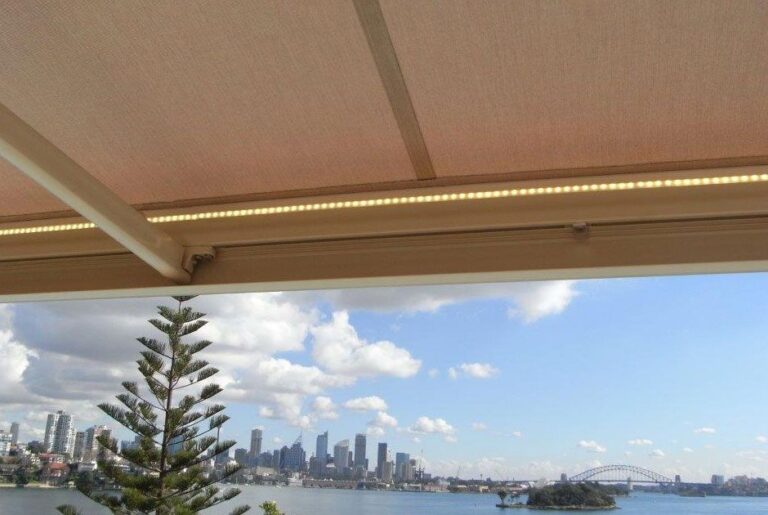
Melbourne receives around 2,200 hours of sunshine annually, with UV intensity concentrated between October and March. The UV Index in Melbourne regularly exceeds 10 during summer — that’s the Extreme category, where unprotected skin can burn in under 15 minutes. What it does to inadequately protected awning fabric over years of exposure is significant.
UV radiation attacks polymer chains in fabric in two ways: photochemical degradation breaks down the molecular bonds in both the fibre and any surface dyes or coatings, while oxidation from ozone and atmospheric pollutants accelerates the process. For the homeowner, the visible result is fading, chalking (a white powdery surface residue on coated fabrics), fabric brittleness, and eventual structural failure at stress points.
The UV Protection Factor (UPF) rating system — assessed under AS/NZS 4399 — is the authoritative measure of how much UV radiation a fabric blocks. A UPF 50+ rating means the fabric allows less than 2% of UV radiation to pass through, providing maximum protection classified as “Excellent.” Premium acrylic fabrics achieve UPF 50+ ratings as a standard specification, while the actual UV protection of HDPE shade cloth depends on knit density — a 90% block density shade cloth delivers a substantially higher UPF than a 50% block product.
UV degradation is cumulative and irreversible. There’s no treatment that restores photodegraded fabric to its original condition. This makes initial material selection the single most leveraged decision in long-term awning performance — far more impactful than any after-market treatment or maintenance product.
Temperature, Wind & Humidity: Melbourne’s Specific Challenges
Melbourne’s climate presents a unique combination of stressors that few other Australian cities match simultaneously. Understanding how each affects your awning fabric helps you make a genuinely informed material choice.
Extreme Temperature Cycling
Melbourne regularly swings 20–25°C within a single day, particularly in spring and autumn. Thermal cycling — the repeated expansion and contraction of fabric under heat, then cooling — places sustained mechanical stress on weave intersections and seams. Solution-dyed acrylic handles this well due to the natural thermal stability of the acrylic polymer. Coated polyester fabrics are more susceptible: the differential thermal expansion between the polyester substrate and the surface coating can cause micro-cracking over time, particularly in cheaper products. In suburbs like Sunbury, Whittlesea, and Cranbourne where temperature extremes are more pronounced than inner-Melbourne, this distinction matters more.
Melbourne’s Wind Loads
Wind is the mechanical adversary of awning fabric. Melbourne’s variable southerly changes and the occasionally fierce north winds of summer put repeated dynamic load on the fabric, particularly at attachment points and fold lines. Under AS/NZS 1170.2, Melbourne falls within wind region A (standard non-cyclonic), but localised exposure in elevated positions, open coastal sites (Mornington Peninsula, Williamstown, Altona), or elevated inland positions can significantly increase wind loads on structures. Look for fabrics with high tear resistance ratings — woven fabrics generally outperform knitted HDPE under dynamic wind loading in retractable configurations.
Coastal Salt Air (Bayside Melbourne)
Salt air accelerates corrosion and can degrade fabric finishes in coastal suburbs including St Kilda, Elwood, Hampton, Sandringham, and anywhere along Port Phillip Bay. Solution-dyed acrylic fabrics hold up well because there’s no surface coating to attack. Aluminium frames with quality powder coating provide the appropriate corrosion-resistant structure to pair with salt-resistant fabric for coastal Melbourne homes.
Humidity and Dew
Melbourne’s relative humidity peaks in the 60–80% range in autumn and winter — high enough to support mould growth on fabrics that retain moisture or lack adequate drainage. North- and west-facing installations receive more sun and dry out faster. South-facing and shaded installations, particularly in leafy eastern suburbs like Belgrave, Healesville approach, or inner suburbs with dense tree canopy, require more attention to breathable fabrics and active mould prevention protocols.
Colour and Weave: How They Affect Heat and Fading
Two variables that are often treated as purely aesthetic decisions — colour and weave structure — have significant functional consequences for Melbourne conditions.
The Colour Heat Equation
Darker colours absorb more solar radiation. A charcoal or navy awning fabric will absorb substantially more heat than the same fabric in cream or light grey, raising the temperature of the fabric itself and, to some degree, the space beneath it. For Melbourne’s 40°C-plus summer days, there’s a practical case for mid-tones and lighter shades to minimise radiant heat transfer to alfresco areas.
However, the relationship is nuanced. An open-weave HDPE fabric in a darker shade may still produce a cooler space beneath than a solid, light-coloured impermeable fabric, because the airflow through the open weave carries heat away. The honest answer is that both colour and weave structure contribute to the thermal outcome — and the best configuration depends on whether you’re prioritising maximum heat block (solid light fabric) or maximum airflow cooling (open weave, darker shade).
On fading: with solution-dyed acrylic, darker shades actually have a slight advantage, as there’s more pigment concentration in each fibre. In surface-dyed or coated fabrics, deeper colours may fade more noticeably because they have further to fall before reaching a washed-out appearance.
Weave Density and Performance
Tighter weaves block more UV and rain but reduce breathability and increase condensation risk. Open weaves maximise airflow and are superior for motorised pergola roof systems where you want ventilation above a covered area. Most awning fabric ranges offer a spectrum of densities — experienced suppliers will match the weave to your specific orientation, use case, and Melbourne suburb conditions.
Material Differences: Fixed, Retractable & Motorised Awnings
The awning type you choose directly influences the fabric specification you need. Material requirements are not interchangeable across configurations.
Fixed Awnings
Fixed canopy-style awnings and Dutch hood awnings remain deployed year-round, which means the fabric accumulates far more total UV exposure than a retractable system. This makes premium UV resistance non-negotiable for fixed applications. Solution-dyed acrylic or a high-quality coated polyester with documented UV stabilisation are the appropriate specifications. Canvas (cotton/poly blend) can be appropriate for period homes in heritage overlay suburbs like Hawthorn, Fitzroy, or Malvern where council or strata guidelines favour traditional aesthetics — but it requires more intensive maintenance and earlier replacement cycles.
Retractable Folding Arm Awnings
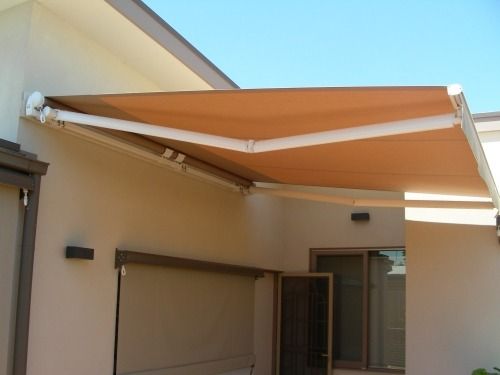
Folding arm awnings retract when not in use, which reduces total UV hours on the fabric and provides some protection from storm winds and hail. The material specification can be slightly more flexible, but solution-dyed acrylic remains the industry recommendation for Melbourne conditions because the folding mechanism places the fabric under repeated mechanical stress at fold lines — where UV-degraded fabric is most prone to cracking and splitting.
Motorised Awnings
Motorised awning systems paired with wind and sun sensors can automatically retract when conditions exceed safe deployment parameters, which protects the fabric from unexpected storm damage. This is genuinely valuable in Melbourne’s variable weather. The fabric requirements remain the same as for manual retractable systems, but the motor integration means precise fabric tension is more critical — poorly specified or degraded fabric can slip or cause tracking issues in the cassette housing.
Retractable Roof Systems
Retractable pergola and sun roof systems typically use HDPE shade cloth or specialised waterproof fabrics depending on the system design. The large spans involved make fabric weight and wind performance particularly critical — HDPE knitted fabrics are preferred for their tear-resistance and lower wind resistance under retraction forces.
Maintenance & Cleaning to Maximise Fabric Lifespan
Even the best awning fabric in Melbourne will underperform its potential lifespan without the right maintenance routine. This isn’t complicated — but it does need to be consistent. Here’s a practical protocol built for Melbourne’s conditions.
Monthly: Brush and Inspect
Use a soft-bristled brush to remove accumulated debris — pollen, eucalyptus leaves, bird droppings, and dust. Melbourne’s spring pollen season (September–November) and the March–April leaf fall are peak debris periods. Bird droppings are acidic and will permanently stain fabric if left — remove promptly with a damp cloth. At the same time, visually inspect seams, fold lines, and attachment points for any signs of fraying, UV cracking, or stress whitening. Early detection prevents minor issues becoming fabric failures.
Every 3–6 Months: Wet Clean
Mix a mild soap solution — standard dish soap or a purpose-formulated fabric cleaner — in warm water. Do not use bleach on acrylic fabrics (it degrades the UV stabilisers in the fibre), and avoid solvent-based cleaners on coated polyester (they attack the surface coating). Apply with a soft brush using circular motions, work into the fabric, then rinse thoroughly with clean water. Allow to dry completely in an extended position — never retract a wet awning, as moisture trapped in folds is the primary cause of mould and mildew growth in Melbourne’s cooler, damper months.
Annually: Reproofing (Where Applicable)
Solution-dyed acrylic fabrics are manufactured with a fluoropolymer-based water-resistant finish. This finish gradually degrades with UV exposure and washing. An annual application of a suitable fabric reproofer (available from the major fabric manufacturers’ ranges) restores the beading action of water on the fabric surface, reduces the risk of through-wetting, and extends the functional life of the finish. Coated polyester does not require reprooofing in the same way, but a UV-protective spray coating can slow surface degradation on entry-level fabrics.
Seasonal: Retraction in Severe Weather
Manually retract awnings ahead of forecast hail events and strong wind warnings. Melbourne’s Bureau of Meteorology issues warnings for winds in excess of 90 km/h — most awning fabrics are not rated for sustained wind loads at that intensity. Motorised systems with wind sensors automate this process, but even these should be checked and manually retracted if a major storm system is approaching.
Winter Storage (Retractable Systems)
If your property is unoccupied for extended winter periods, retract folding arm awnings and leave them stored. Extended deployment during Melbourne’s winter — with persistent damp, low sun angle, and reduced evaporation — creates ideal conditions for mould colonisation, particularly on north-facing walls that receive less direct sun than in summer.
Mould, Mildew & Melbourne’s Damp Seasons
Mould and mildew growth on awning fabric is the most common complaint from Melbourne homeowners — and it’s almost entirely preventable with the right material choice and maintenance habits. Let’s separate myth from fact.
Why Melbourne’s Autumn and Winter Create Mould Risk
Melbourne’s April–August period combines lower temperatures, higher humidity (frequently 70–85% RH), and reduced sunlight. These conditions are ideal for mould spore germination on organic debris that accumulates on fabric — dust, pollen deposits, bird droppings, and moisture. The problem is not the fabric itself in most cases, but the organic material on it that serves as a mould substrate.
Which Fabrics Are Most Mould-Resistant?
Solution-dyed acrylic fabrics are inherently mould-resistant because the synthetic fibre provides no nutritional substrate for fungal growth. Mould that appears on acrylic fabric is actually growing on the dirt deposited on the surface — clean the fabric and the mould disappears. Coated polyester behaves similarly when the coating is intact. Canvas and natural fibre blends are significantly more susceptible because the cellulosic fibres can support fungal growth directly.
Treating Existing Mould Growth
For light mould on acrylic or coated polyester, a solution of one part white vinegar to four parts water applied with a soft brush, left for 10 minutes, then rinsed thoroughly is effective and fabric-safe. For more established growth, diluted Napisan (oxygen-based bleach) is safe on acrylic — do not use chlorine bleach. Avoid scrubbing aggressively, which can mat the fabric surface and reduce water-shedding performance.
Never retract a damp or mould-affected awning without treating it first. Folded mould is dark, warm, and humid — ideal for accelerated fungal growth that can permanently stain the fabric before you next deploy it.
Australian Standards & Fabric Performance Ratings
When evaluating awning materials, technical performance data matters more than marketing language. Here’s the standards framework that governs awning fabric performance in Australia as of 2026.
- AS/NZS 4399:1996 — Sun protective clothing: Evaluation and classification
Provides the UPF (Ultraviolet Protection Factor) assessment methodology applicable to awning fabrics. UPF 50+ is the highest classification, indicating 98%+ UV blockage. - AS/NZS 1170.2 — Structural design actions: Wind actions
Governs wind load design for structures including awning installations. Melbourne falls in Wind Region A, but exposure classifications can significantly affect localised wind loads on awning installations. - EN 13561:2015 — External blinds and awnings: Performance requirements including safety
The European standard widely referenced by Australian premium awning manufacturers. Covers wind resistance, mechanical endurance (cycle testing), and water resistance classifications relevant to fabric performance. - AS 4055 — Wind loads for housing
Relevant to residential awning installations, particularly for council permit applications in some Melbourne LGAs.
When requesting fabric specifications from your supplier, ask for the technical data sheet that includes UPF rating, wind resistance classification, water column resistance (for waterproof fabrics), and abrasion resistance rating. Reputable Melbourne awning suppliers will provide this without hesitation.
Choosing the Right Material for Your Melbourne Home
With all the technical detail unpacked, here’s a practical framework for matching material to your specific Melbourne situation.
For North and West-Facing Alfresco Areas
Maximum UV and heat exposure during peak afternoon hours. This is the highest-demand position for awning fabric in Melbourne. Specify solution-dyed acrylic with a confirmed UPF 50+ rating, in a mid-tone or lighter colour to minimise radiant heat transmission. A motorised folding arm awning with an automatic sun sensor will optimise deployment for maximum benefit while protecting the fabric from overheating when not in use.
For Pergola Covers and Outdoor Entertaining Rooms
Open pergola structures benefit most from retractable roof systems using HDPE shade cloth where ventilation is the priority, or waterproof PVC-coated fabrics where weather protection is the goal. Specify a minimum 90% UV block for HDPE shade cloth in full-sun Melbourne positions.
For Heritage Properties and Strata Settings
Melbourne has extensive Heritage Overlay coverage across inner suburbs including Fitzroy, Carlton, South Yarra, Prahran, and St Kilda. Strata and owners corporation approvals are required in many apartment contexts. In these settings, fabric colour and style choice may be constrained. Traditional canvas-look acrylics (which replicate the striped appearance of original canvas awnings while delivering modern UV performance) are available and appropriate for heritage-sensitive applications. Always confirm council or strata requirements before material selection.
For Properties in High-Wind Exposures
Coastal sites along Port Phillip Bay, elevated positions in Melbourne’s hillier eastern suburbs, and open-site properties on Melbourne’s western plains should specify fabrics with documented wind resistance ratings and pair them with awning systems that include wind sensor automation. High-wind-rated folding arm systems with robust fabric specifications are essential — this is not an area to economise on material grade.
On Warranty Coverage
Premium solution-dyed acrylic fabrics from major manufacturers typically carry 5–10 year fabric warranties against UV degradation and colour fastness failure. This warranty is conditional on correct installation and maintenance — specifically, it does not cover damage from improper cleaning products, mechanical damage from deployment in high winds, or mould growth attributable to inadequate maintenance. Retain your installation documentation and follow the manufacturer’s care protocol to protect warranty eligibility.
Frequently Asked Questions
What is the best awning fabric for Melbourne’s UV and heat?
How long will my awning fabric last in Melbourne?
Can I use bleach to clean my awning?
Does darker awning fabric make the area underneath hotter?
Do I need council approval for an awning in Melbourne?
How do I prevent mould on my awning in winter?
What Australian Standard covers awning fabric UV performance?
Ready to Choose the Right Awning Fabric for Your Melbourne Home?
Every Melbourne property is different — aspect, suburb, architectural style, and how you use your outdoor space all inform the best material choice. Our team at Melbourne Awnings has been helping Melbourne homeowners navigate these decisions for years. We’ll help you select the right fabric from our range of premium UV-rated acrylic and HDPE options, match it to the right awning system, and back it with proper installation and manufacturer warranty.