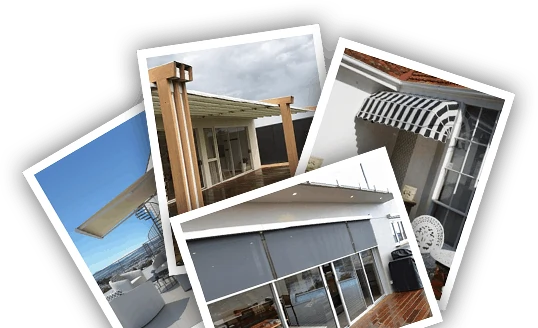
An awning can cut internal temperatures by up to 15 degrees Celsius — and for Melbourne homes battling that notorious 40-degree January heat, that is not a small deal. Whether your patio, balcony, or deck is crying out for shade, or your west-facing windows are turning the lounge into a radiator every afternoon, the right awning solves it fast. This guide breaks down exactly what to choose, what it costs, and what Melbourne’s unpredictable four-seasons-in-a-day weather actually demands from an outdoor shading solution.
We cover folding arm awnings, canopy systems, window options, motorisation, fabric choices, permit rules under the Victoria Building Regulations 2018, and real maintenance routines. By the end, you will know precisely which awning suits your home — and which ones to avoid.
Why Your Melbourne Home Actually Needs an Awning
Melbourne’s climate is genuinely brutal at both ends. Summers routinely push past 38 degrees, while UV levels in Victoria rank among the highest globally. According to the Australian Bureau of Meteorology, Melbourne averages over 2,300 hours of sunshine annually. That is a lot of unshaded exposure hitting your windows, walls, and outdoor furniture.
Then there is the southerly buster — that sharp wind change that arrives without much notice and sends outdoor cushions flying into the neighbour’s yard. A quality awning handles both extremes: shading you sensibly in summer heat and retracting instantly before the wind picks up.
Verified Quick Fact: According to the Australian Bureau of Meteorology (BOM), Melbourne averages roughly 30 days per year above 30 degrees Celsius. External shading such as awnings is one of the most effective passive cooling strategies endorsed by the Australian Government’s Department of Energy.
The department notes that well-positioned external shading can reduce cooling energy use by up to 40% in Australian homes.
Beyond the temperature argument, awnings genuinely extend your living space. A Melbourne home with a shaded deck or patio effectively gains another room — one that can be used comfortably from October through April. Estate agents in Melbourne consistently note that functional outdoor living areas add perceived and real value to a property.
Moreover, awnings protect indoor furnishings. UV rays fade sofas, rugs, and timber floors faster than most people realise. External shading stops that damage before it starts.
Every Type of Awning Explained for Australian Homes
Not every awning is built for every situation. The wrong choice on a small balcony, an exposed wall, or a large entertaining area can waste money and look awkward. Here is a straightforward breakdown of what is available and where each option genuinely performs.
Folding Arm Awning
This is the workhorse of the Australian awning market. A folding arm awning extends outward from the wall using articulated arms — no posts, no columns. It creates a clear, unobstructed shaded zone over a patio or deck. When conditions change, it folds back flat against the wall.
These suit wide patios and north or west-facing outdoor areas beautifully. Motorised versions from brands like Somfy and Becker respond to wind sensors automatically. You can explore folding arm awnings at Melbourne Awnings to see projection widths and fabric options available locally.
Canopy Awning
A canopy awning mounts above a door or window and projects outward at a fixed angle. It is simple, architectural, and suits heritage Melbourne homes beautifully. There are no arms — just a clean sloping canopy. These work brilliantly over front doors and shop fronts.
They do not retract, so wind resistance of the fabric matters a lot in Melbourne’s changeable conditions. Browse canopy awning options to see architectural styles suited to Victorian and contemporary facades.
Drop Arm Awning
Drop arm awnings project outward and downward at a steeper angle using vertical side arms. They are ideal for windows and openings where low sun angles are the problem. A west-facing window in Melbourne’s afternoon is a perfect candidate for a drop arm setup.
The steep angle creates excellent privacy screening too — a bonus for street-facing rooms. Fabric choice matters here because the material faces direct sun for extended periods.
Window Awning
Window awnings sit directly above individual windows, projecting outward to block overhead sun while keeping natural light flowing in. They are compact, budget-friendly, and effective for east and north-facing windows in Melbourne homes.
See window awning styles for profiles that suit both brick and weatherboard homes common across Melbourne’s suburbs.
Retractable Pergola and Sun Roof System
This is an entirely different category — and a growing one. A retractable pergola roof or sun roof system mounts overhead like a traditional pergola frame but carries a retractable fabric canopy. You can open it for winter sun or close it against summer heat in seconds.
For Melbourne’s entertaining culture, this is often the smartest investment. It handles light rain, glare, heat, and privacy in one system. Discover outdoor pergola and sun roof systems that suit Melbourne’s climate and architectural styles.
Sunblinds and Sunscreen Blinds
Sunblinds and sunscreen mesh blinds are vertical drop solutions for enclosed outdoor rooms, pergola sides, and alfresco areas. They block UV and glare while maintaining outward vision — which is why they work so well on balconies and entertainment areas facing busy Melbourne streets.
Learn about sunblinds and sunscreen blinds for practical vertical shading options.
Quick Comparison: Awning Types at a Glance
| Awning Type | Best For | Retractable? | Motorisable? | Price Range (Approx.) |
|---|---|---|---|---|
| Folding Arm | Large patios and decks | Yes | Yes | $2,500 – $6,000+ |
| Canopy | Doors and shopfronts | No | No | $800 – $2,500 |
| Drop Arm | West-facing windows | Yes | Yes | $1,200 – $3,500 |
| Window Awning | Individual windows | Some styles | Some styles | $800 – $2,000 |
| Retractable Pergola | Full outdoor rooms | Yes | Yes | $4,000 – $15,000+ |
| Sunblinds / Sunscreen | Vertical privacy and glare | Yes | Yes | $600 – $2,000 |
Indicative pricing for Melbourne supply and installation. Final costs vary based on size, fabric, and motorisation. Contact Melbourne Awnings for an accurate quote.
What an Awning Really Costs in Melbourne in 2026
Let’s be direct about awning cost, because this is where a lot of Melbourne homeowners get surprised. The cheapest awning you can buy is rarely the cheapest option over five years — and in Melbourne’s UV-heavy, wind-variable environment, budget materials pay the price early.
Entry-level fixed window awnings start around $800 to $1,200 fully installed. Mid-range motorised folding arm awnings sit comfortably between $3,000 and $5,500. Larger retractable pergola systems — particularly those covering full alfresco areas — can reach $10,000 to $15,000 or more, depending on span, fabric grade, and motorisation package.
What Pushes the Price Up?
Several factors move an awning quote upward in Melbourne. Projection width is the biggest variable — wider awnings need stronger arms and heavier fabrics. Motorisation adds roughly $400 to $900 depending on the motor brand. Somfy and Becker motors cost more than generic alternatives but carry significantly stronger warranties and smart-home compatibility.
Fabric grade is another cost driver. Solution-dyed acrylic — the industry gold standard — costs more upfront but resists UV, mould, and Melbourne’s variable humidity far better than cheaper alternatives. Custom sizing for unusual wall widths or irregular facades also adds to labour time and therefore cost.
Verified Quick Fact: The Australian Competition and Consumer Commission (ACCC) advises consumers to always obtain written quotes for home improvement installations and to check that installers carry current public liability insurance. Source: ACCC Consumer Rights.
Retractable Awning vs Fixed Awning: Which One Wins?
This is one of the most common debates among Melbourne homeowners researching awnings online — and the answer depends entirely on your situation. There is no universally correct answer, but there are clear indicators for each choice.
The Case for Retractable
A retractable awning gives you control. Open it when the afternoon sun hammers down. Retract it when Melbourne’s southerly winds arrive unexpectedly. Because the fabric spends a portion of its life folded and protected, it lasts considerably longer than a permanently extended fixed awning facing constant UV and weather exposure.
Retractable options also let you enjoy winter sun on your patio. You simply leave the awning retracted and let that warm Melbourne winter light in. Fixed awnings block light year-round — which feels great in January but rather bleak in June.
The Case for Fixed
Fixed awnings cost less and require virtually no mechanical maintenance. They are excellent over windows where you want permanent shading without thinking about it. A fixed canopy over a north-facing window prevents sun entry year-round — which suits rooms that overheat regardless of season.
Fixed solutions also work brilliantly for commercial-style installations above entryways, cafe fronts, and heritage Melbourne shopfronts. Structurally, they are simpler and less prone to mechanical issues over time.
Verified Quick Fact: According to Your Home — Australia’s guide to environmentally sustainable homes (Australian Government publication), retractable external shading systems allow homeowners to maximise winter solar gain while controlling summer heat entry — something fixed awnings alone cannot achieve.
Awning vs Pergola vs Shade Sail: A Straight Comparison
Many Melbourne homeowners come in undecided between an awning, a pergola, and a shade sail. Each solves outdoor shading differently. Picking the wrong one for your space, budget, or lifestyle means spending money twice.
| Feature | Awning | Pergola | Shade Sail |
|---|---|---|---|
| Flexibility | High — retracts fully | Low — permanent structure | Medium — removable seasonally |
| Weather protection | Good (rain-dependent on pitch) | Excellent with roof | Sun only; (unless using waterproof PVC); vulnerable to high wind loads |
| Planning permit (Vic) | Usually not required | Often required | Usually not required |
| Cost range | $800 – $15,000+ | $5,000 – $40,000+ | $300 – $2,000 |
| Lifespan | 10-15 years | 20-30 years (structure) | 5-10 years |
| Motorisation available | Yes | Yes (retractable roofs) | No |
| Best for | Patios, balconies, windows | Full outdoor entertaining rooms | Pools, play areas, casual use |
For most Melbourne homeowners balancing budget, flexibility, and practicality, a quality retractable awning is the smartest starting point. It requires no council approval in most Victorian residential situations, installs in a day, and adapts to Melbourne’s four-seasons-in-a-day reputation better than any fixed structure.
If you are looking to create a fully enclosed outdoor room, a retractable pergola sun roof system combined with sunblinds on the sides delivers the permanence of a pergola with the flexibility of a retractable system.
Motorised Awning and Smart Home Integration
Motorised awnings have moved from a luxury feature to a practical standard for most Melbourne homeowners choosing a new system. The reason is simple: a retractable awning only protects your investment if you actually retract it when the weather turns. In Melbourne, that means fast response times.
How Motorisation Works in Practice
A motorised awning uses a tubular motor inside the roller tube. At the press of a wall switch or a remote, the arms extend or retract in around 30 to 60 seconds. Higher-end systems from Somfy and Becker include wi-fi connectivity and integrate directly with smart home platforms including Google Home, Amazon Alexa, and Apple HomeKit.
Wind sensors attach to the awning frame and monitor wind speed in real time. When gusts exceed a set threshold — typically around 35 to 45 km/h — the awning retracts automatically without any manual input. Sun sensors can also open the awning automatically when UV intensity reaches a defined level.
Alpha Motors: A Reliable Mid-Range Choice
For budget-conscious Melbourne homeowners wanting reliable motorisation without the premium Somfy price point, Alpha motors are a solid mid-range option. Melbourne Awnings installs Somfy, Becker, and Alpha motor systems across its full product range.
Verified Quick Fact: Somfy, founded in France, is the world’s leading manufacturer of motorisation solutions for awnings and shutters, operating in over 58 countries. Their RTS (Radio Technology Somfy) and io-homecontrol protocols are compatible with major smart home ecosystems. Source: Somfy Australia.
Choosing the Right Awning Fabric for Melbourne’s Weather
Fabric is where the long-term value of your awning is won or lost. Melbourne homeowners often compare two or three systems and focus heavily on frame colour — then forget about the fabric entirely. That is a mistake, because the fabric does the actual work.
Solution-Dyed Acrylic
This is the premium standard for outdoor awning fabrics in Australia. The dye goes through the entire fibre rather than sitting on the surface, so UV cannot bleach it from the outside in. Solution-dyed acrylic fabrics such as Sunbrella maintain their colour and structural integrity for 10 to 12 years under typical Australian UV exposure.
They are also inherently water-resistant, mould-resistant, and easy to clean — which matters enormously in Melbourne’s spring humidity.
Polyester with PVC Coating
Cheaper awning fabrics use polyester with a PVC coating. Initially, they look fine. Over time, however, UV degrades the coating and the base fabric becomes brittle. In Melbourne’s harsh summer sun, this degradation can happen within four to six years. Mould also colonises PVC coatings faster than acrylic in humid conditions.
Sunscreen Mesh Fabric
Sunscreen mesh is an open-weave fabric used primarily for vertical blinds, sunblinds, and drop-screen applications. It blocks UV while maintaining outward vision — so you keep the view across your Melbourne balcony without the glare. Openness factor ratings range from 1% to 10%, controlling the balance of light and privacy.
Explore awning fabric options at Melbourne Awnings to review colour ranges, UPF ratings, and technical specifications relevant to Melbourne’s conditions.
What Colour Should You Choose?
Lighter fabric colours reflect more sunlight away from the awning surface. Darker colours absorb heat on the fabric itself but can reduce glare more effectively beneath the awning. For Melbourne patios where reflected glare from neighbouring walls is an issue, a mid-tone charcoal or grey is often the practical winner.
Installation, Permits, and What Victoria Actually Requires
This is where Melbourne homeowners often overthink things — and occasionally underthink them. The permit situation in Victoria is genuinely straightforward for most awning installations.
Do You Need a Permit in Victoria?
Under the Victoria Building Regulations 2018, most residential awnings are classified as exempt from building permit requirements. Specifically, an awning attached to a dwelling and projecting less than 2 metres in depth generally falls within the exempt class. However, if the awning attaches to a heritage-listed property or falls within an overlay zone, a planning permit from your local council may be required regardless of size.
Always confirm with your local council before installation if your property is heritage-listed, in a vegetation protection overlay, or within 1 metre of a boundary. The Victorian Building Authority (VBA) is the definitive source for current Victorian building regulation guidance.
Professional Installation: Why It Matters
Even when no permit is required, professional installation protects your warranty and structural safety. A poorly installed bracket on a double-brick Melbourne home can crack render or fail under wind load. Experienced installers know the fixing requirements for different wall substrates — brick, weatherboard, rendered masonry, and steel framing.
Motorised systems also require correct wiring, load balancing, and sensor calibration. Incorrect installation voids manufacturer warranties on Somfy and Becker systems. Melbourne Awnings handles supply, installation, and commissioning as a complete service from their Gardenvale display centre.
“Great service from Ivan at Melbourne Awnings on our pergola shade. Highly recommended!”
— Robert Begg, 05/01/2021
How to Make Your Awning Last the Distance
An awning is a reasonable investment. Looking after it costs almost nothing compared to early replacement. Here is a practical maintenance routine specifically for Melbourne conditions — which means dealing with summer dust, pollen, and sudden storms.
Weekly and After-Storm Checks
- Brush loose debris, leaves, and dust off the retracted fabric before the next extension.
- Inspect awning arms and brackets for any visible bending after high-wind events.
- Check that the fabric rolls evenly and sits squarely when extended.
- Never operate a motorised awning during Melbourne’s thunderstorms or after ice or frost has formed on the fabric.
Seasonal Deep Clean
Twice a year — ideally in April before autumn and in October before Melbourne’s pollen season peaks — give the awning fabric a thorough clean. Use warm water, a mild liquid soap (not bleach), and a soft-bristle brush. Work in gentle circular motions and rinse thoroughly with a garden hose. Never use a high-pressure washer directly on the fabric seams — this forces water into the weave and can remove the water-resistance treatment.
Allow the fabric to dry fully in the extended position before retracting. Storing damp fabric leads directly to mould — especially during Melbourne’s humid spring months.
Mechanical Components
Folding arm joints and pivot points benefit from a light application of silicone spray lubricant once a year. Avoid oil-based lubricants that attract dust and grit. Motor-driven systems require no routine lubrication, but annual inspection by a qualified technician catches issues before they become expensive repairs.
If you notice the awning extending unevenly, one arm travelling faster than the other, or unusual motor noise, contact your installer promptly. Early fixes cost a fraction of a full motor or arm replacement.
Frequently Asked Questions About Awnings in Melbourne
What are the different types of awning available for Australian homes?
Australian homes commonly use folding arm awnings, canopy awnings, drop arm awnings, window awnings, and retractable pergola roof systems. Sunblinds and sunscreen mesh blinds add vertical shading options. Each type suits different spaces, sun angles, and architectural styles across Melbourne’s diverse housing stock.
How much does an awning cost to install in Melbourne in 2026?
Expect to spend between $800 and $2,000 for a basic window or canopy awning installed. Motorised folding arm awnings typically sit between $2,500 and $6,000. Larger retractable pergola systems can reach $10,000 to $15,000 or more. Always obtain a site-specific quote, as size, fabric grade, and motorisation significantly affect final pricing.
Do I need a building permit to install an awning in Victoria?
Most residential awning installations fall within the exempt category under the Victoria Building Regulations 2018. However, heritage-listed properties, overlay zones, or installations near boundaries may require a planning permit from your local council. Always verify with your council or check the Victorian Building Authority before proceeding.
What is the best awning for a small balcony apartment in Melbourne?
A compact folding arm awning or a drop arm window awning works best for Melbourne balconies. Both extend only when needed and retract completely to protect against Melbourne’s sudden wind changes. For enclosed balconies, a vertical sunscreen blind gives privacy and UV control without projecting outward at all.
How long does an awning last and when should it be replaced?
A quality awning frame typically lasts 15 years or more with proper maintenance. Fabric lifespan depends heavily on material quality — solution-dyed acrylic lasts 10 to 12 years, while cheaper polyester-PVC fabrics may need replacing within five to seven years under Melbourne’s UV exposure. Replace the fabric when it shows sustained fading, brittleness, or water absorption.
Can an awning be motorised and connected to a smart home system?
Yes. Somfy and Becker motor systems integrate with Google Home, Amazon Alexa, and Apple HomeKit. Wind and sun sensors automate retraction and extension based on real-time conditions. Melbourne Awnings installs Somfy, Becker, and Alpha motor systems across its full product range.
What is the strongest awning material for coastal or high-wind areas in Australia?
Solution-dyed acrylic fabrics — particularly Sunbrella — offer the best combination of UV resistance, durability, and structural strength for Australian coastal and high-wind environments. Look for fabrics carrying a UPF 50+ rating and confirm the frame system is rated for the wind zone applicable to your Melbourne location.
Is an awning or a pergola better for my outdoor entertaining area?
Awnings are more flexible, faster to install, lower-cost, and require no permit in most Melbourne situations. Pergolas create a permanent architectural structure with greater presence but involve higher cost and often require council approval. For Melbourne’s variable weather, a retractable awning or retractable pergola sun roof gives the best of both worlds.
How do I clean and maintain my awning so it lasts longer?
Brush debris off regularly before extending. Use warm water, mild liquid soap, and a soft brush for a thorough seasonal clean. Rinse well and allow full drying before retracting. Lubricate mechanical joints annually with silicone spray. Never store damp fabric, and always retract before Melbourne’s southerly buster arrives.
Can awnings be custom-made to fit unusual window or wall dimensions?
Yes. Melbourne Awnings manufactures and installs custom-built awning solutions for non-standard widths, angled walls, irregular facades, and heritage properties across Melbourne. Visiting the Gardenvale display centre allows you to review fabric, frame, and sizing options with an expert before committing.
How do I know if my awning needs a wind sensor?
If your property is exposed to Melbourne’s coastal or elevated wind conditions — particularly southerly busters or bay breezes — a wind sensor is strongly recommended. It automatically retracts the awning when gusts reach a set threshold, protecting both the awning and anything beneath it.
Can I install an awning myself in Melbourne?
Small, lightweight window awnings are sometimes installed by confident DIYers. However, folding arm awnings, motorised systems, and any structure attached to double-brick, rendered masonry, or steel-framed walls require professional installation. Incorrect fixing can cause structural damage, void warranties, and create safety risks under wind load.
What fabric colour is best for heat reduction under an awning?
Lighter colours reflect more solar energy away from the fabric surface. Darker shades absorb more heat on the awning itself but reduce glare underneath more effectively. For Melbourne patios dealing with reflected afternoon glare, mid-tone greys and charcoals are a consistently popular and practical choice.
Final Thoughts: The Right Awning Makes Melbourne Outdoor Living Work
Choosing an awning for a Melbourne home is not complicated — once you know what to look for. Match the awning type to your space. Choose a fabric that handles Melbourne’s UV properly. Consider motorisation if your lifestyle or property exposure demands it. Check the permit requirements if your property has any heritage or overlay flags, and always get it installed by someone who understands Melbourne’s structural demands.
The payoff is real: cooler interiors, extended outdoor living from October through April, reduced cooling energy costs, and a home that actually works with Melbourne’s climate rather than against it.
Whether you are shading a compact inner-suburb balcony or creating a full alfresco entertaining zone in Melbourne’s outer suburbs, the right awning solution exists for your budget, style, and wall configuration.
Since you have made it this far — here is the shortcut. Jump to Melbourne Awnings and have a proper look around. You might find exactly what you were picturing before you even knew the technical name for it.